

Solutions
How your operation could run on myai.
Working apps for each part of the business, built on the ERP, spreadsheets, and email you already run.
Manufacturing
The floor, the schedule, maintenance, and the daily huddle.
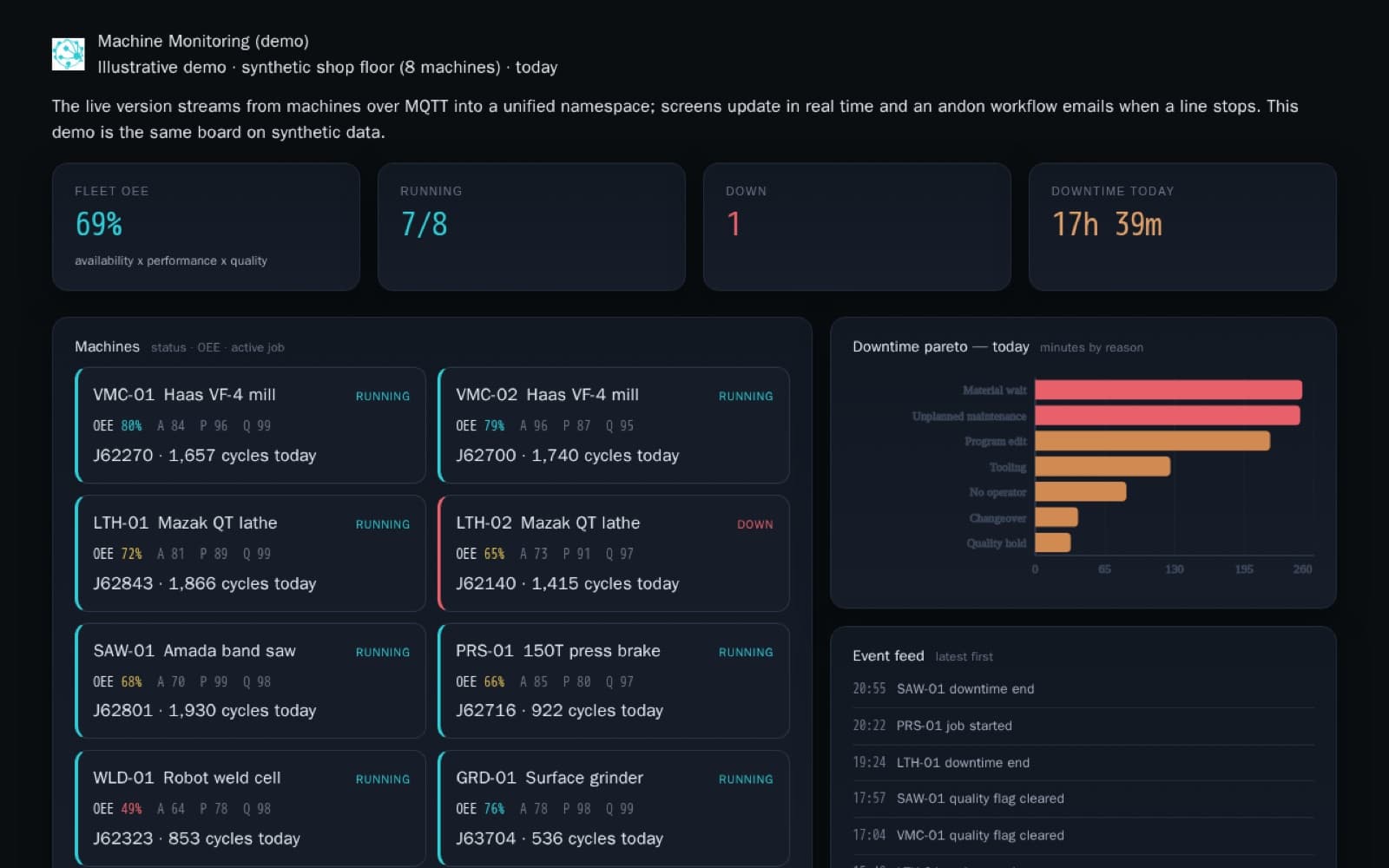
Machine Monitoring
What is running, what is down, and why?
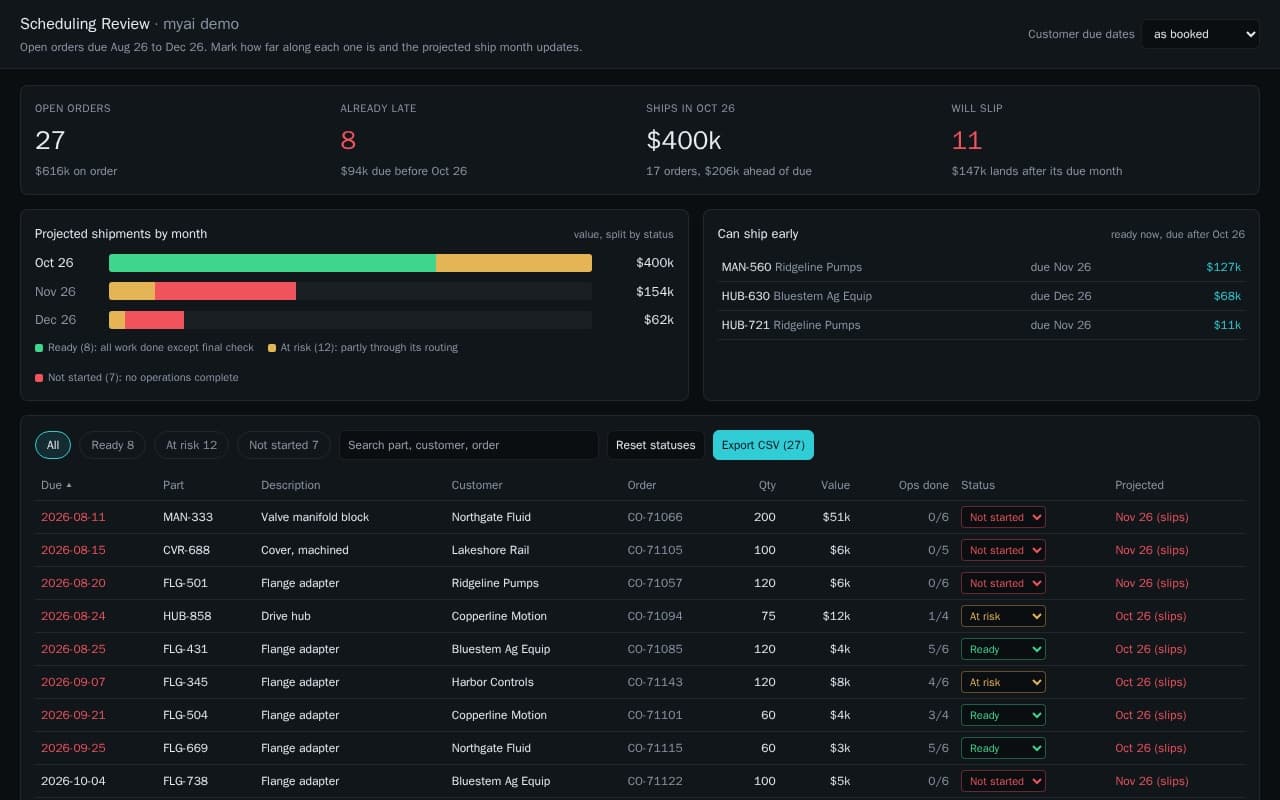
Scheduling Review
What can still ship early when the schedule moves?
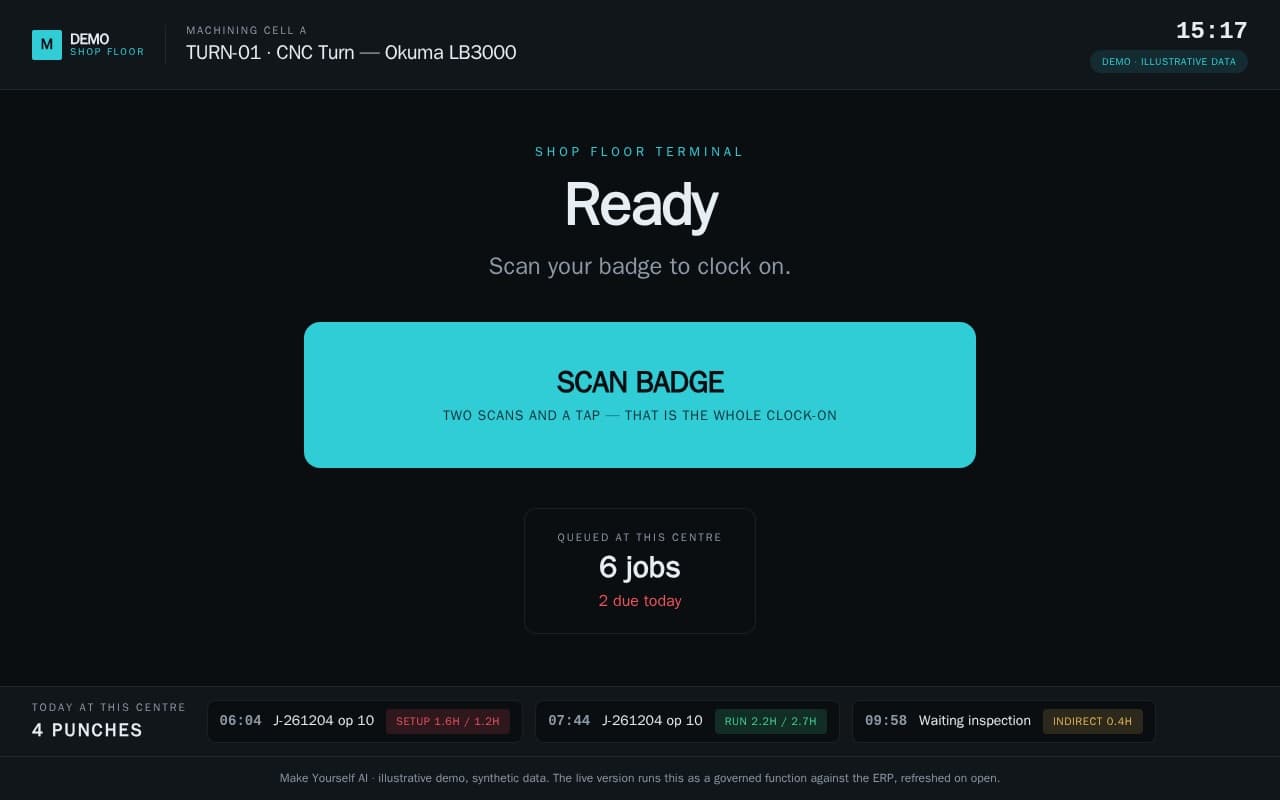
Operator Job Terminal
What is each operator running, and what is blocking the job now?
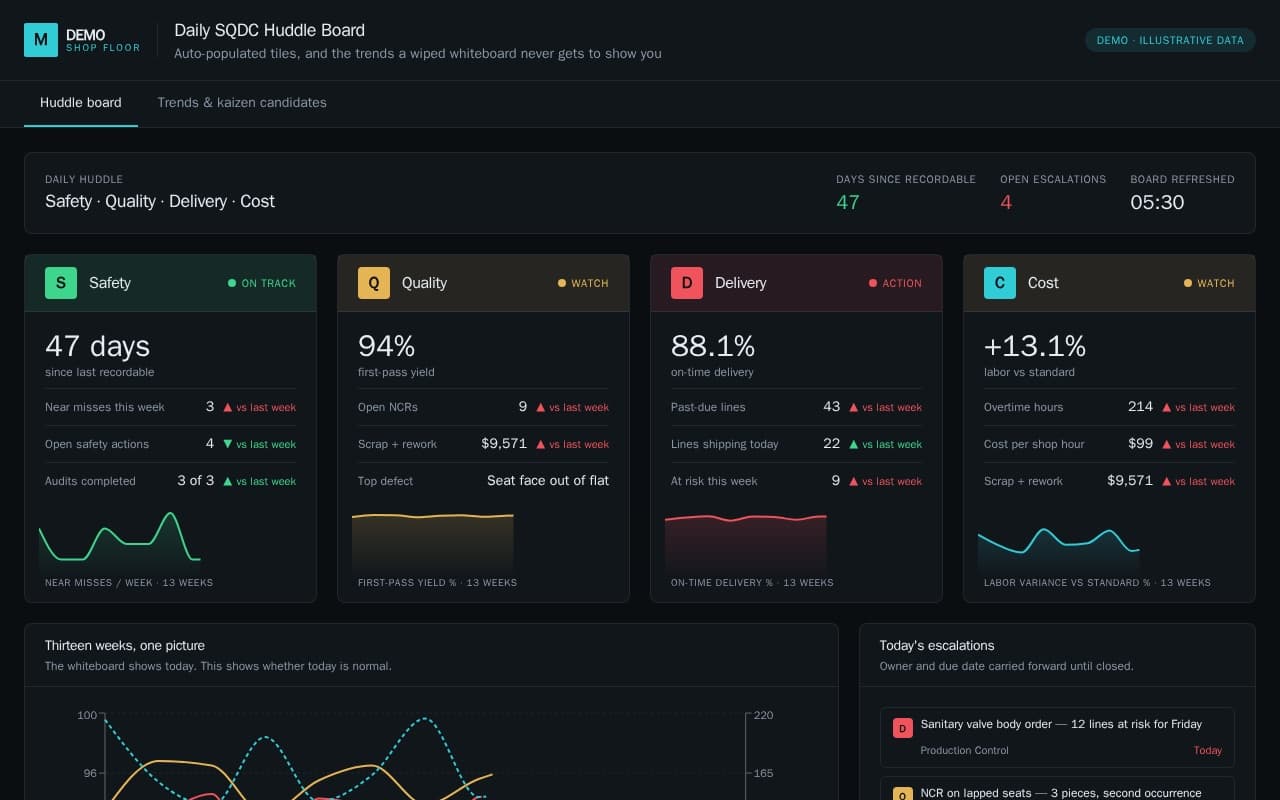
Shop Floor SQDC Board
Which exception needs an owner before the huddle ends?
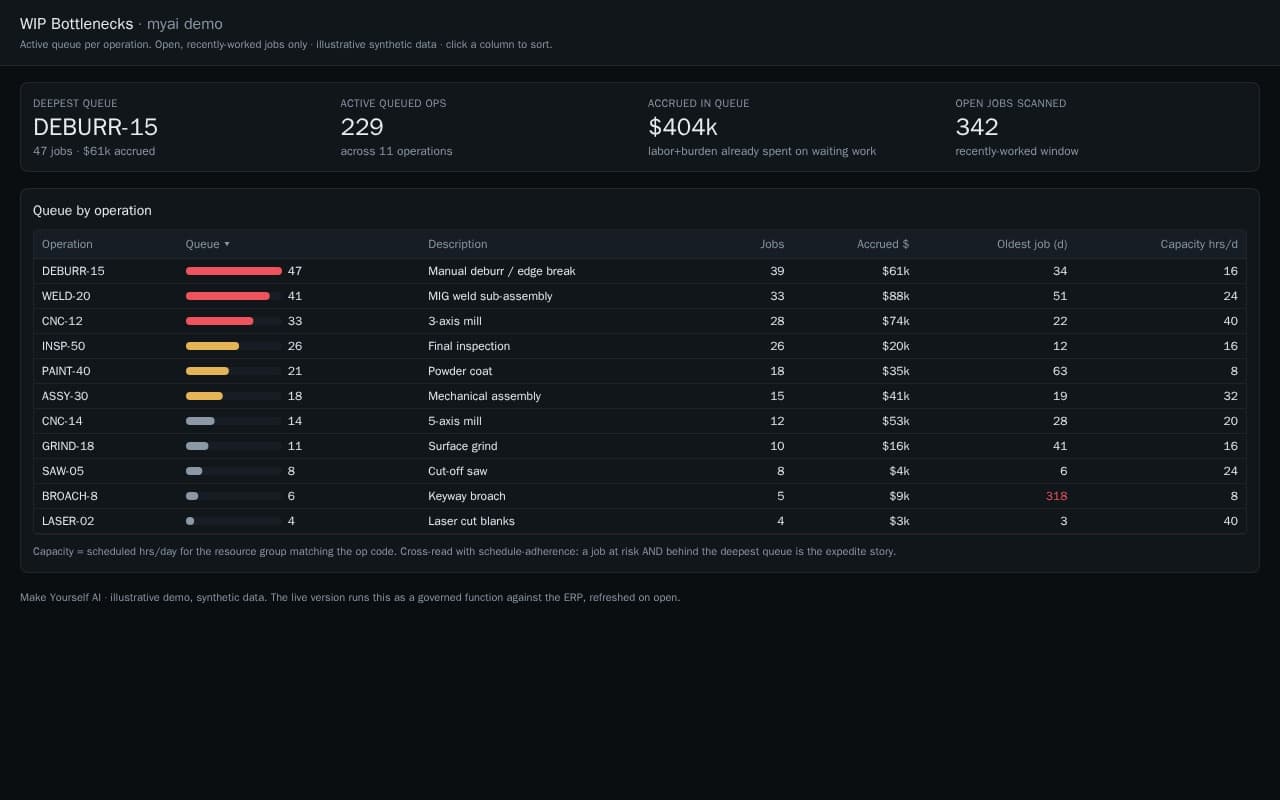
WIP Bottlenecks
Where is work piling up, and which queue needs attention first?
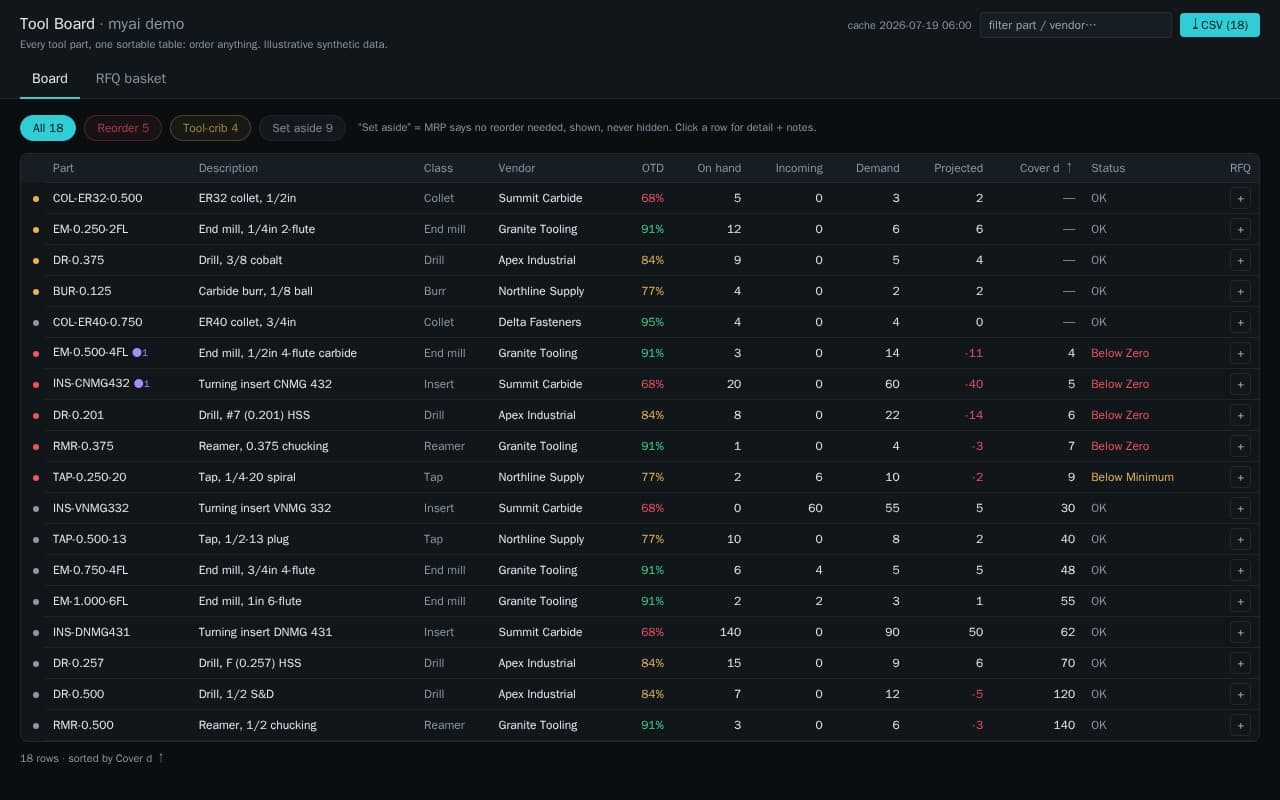
Tool Board
Which tools are below reorder point, and which vendor quotes are still open?
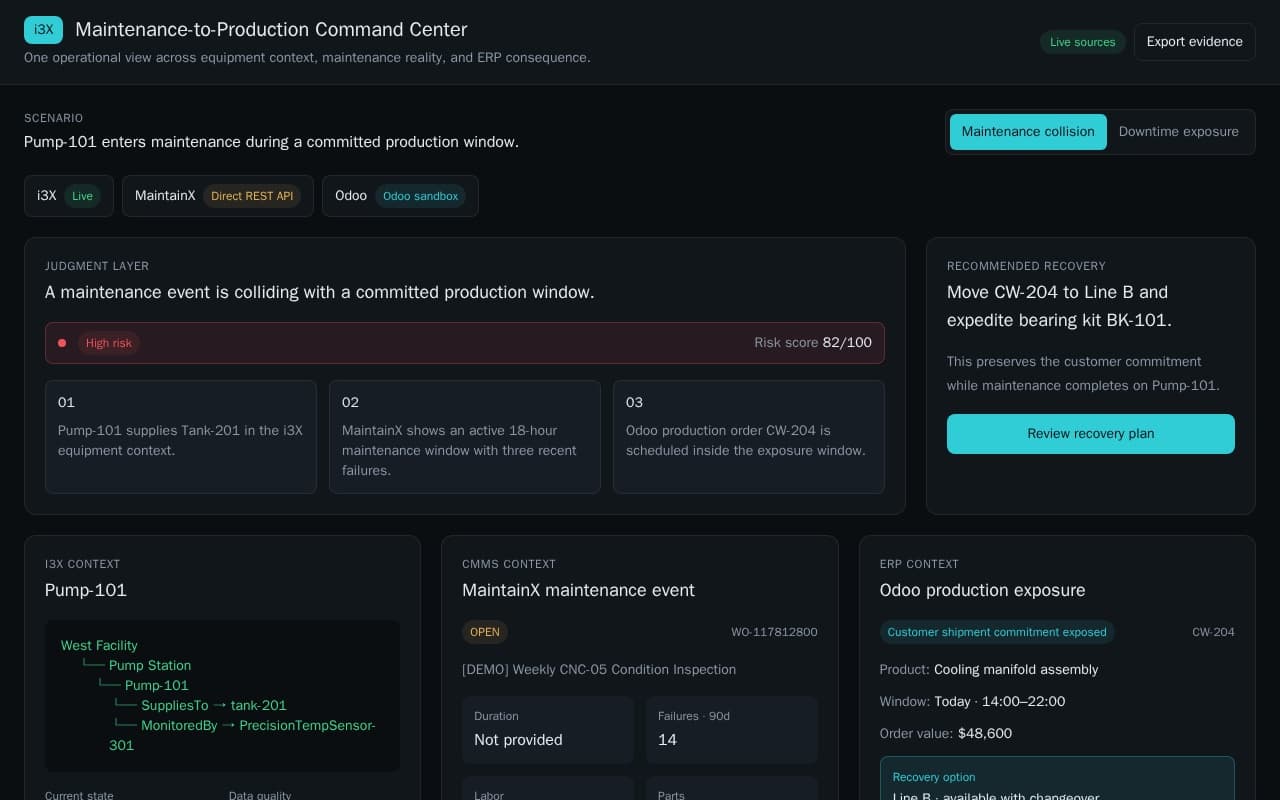
Maintenance-to-Production Command Center
Which asset problem is about to become a shipping problem?
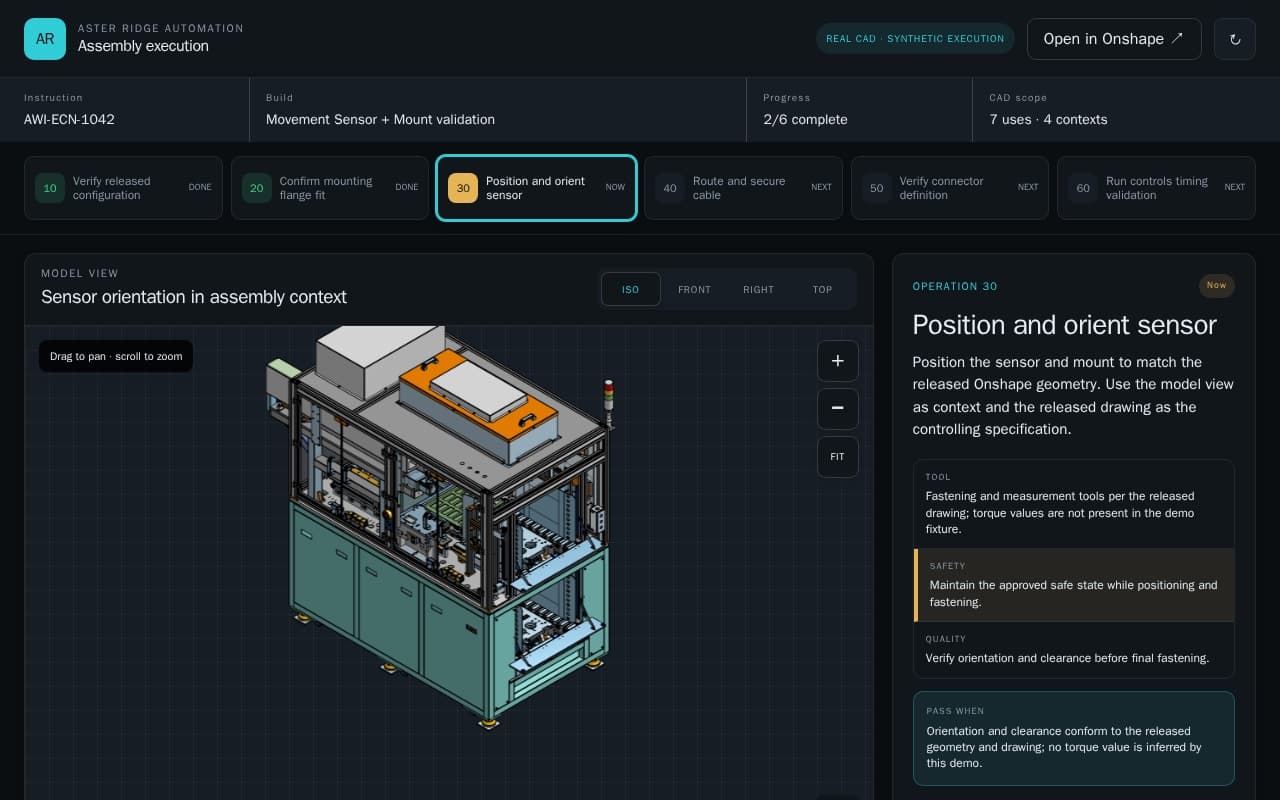
Assembly Execution
What does this build step need, and does the floor have it?
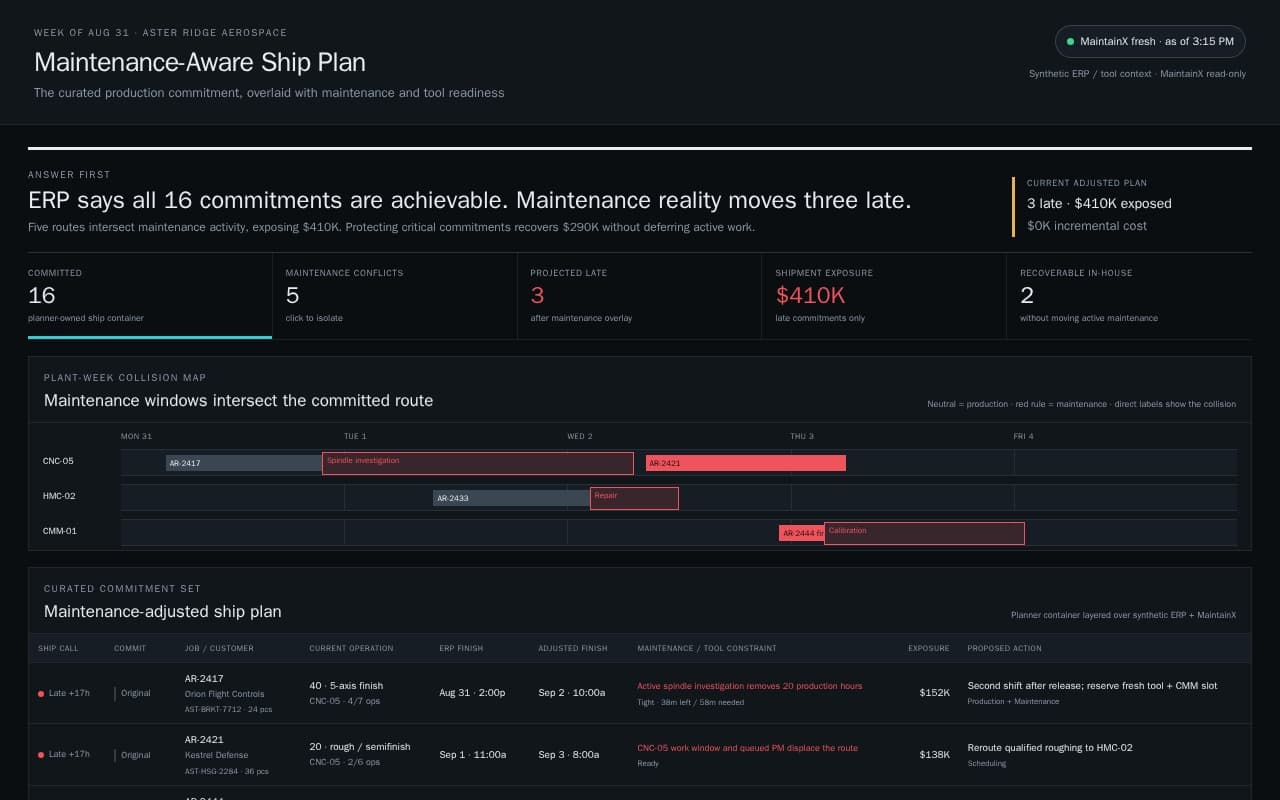
Schedule Impact & Recovery
Which maintenance window collides with a due job, and what recovers it?
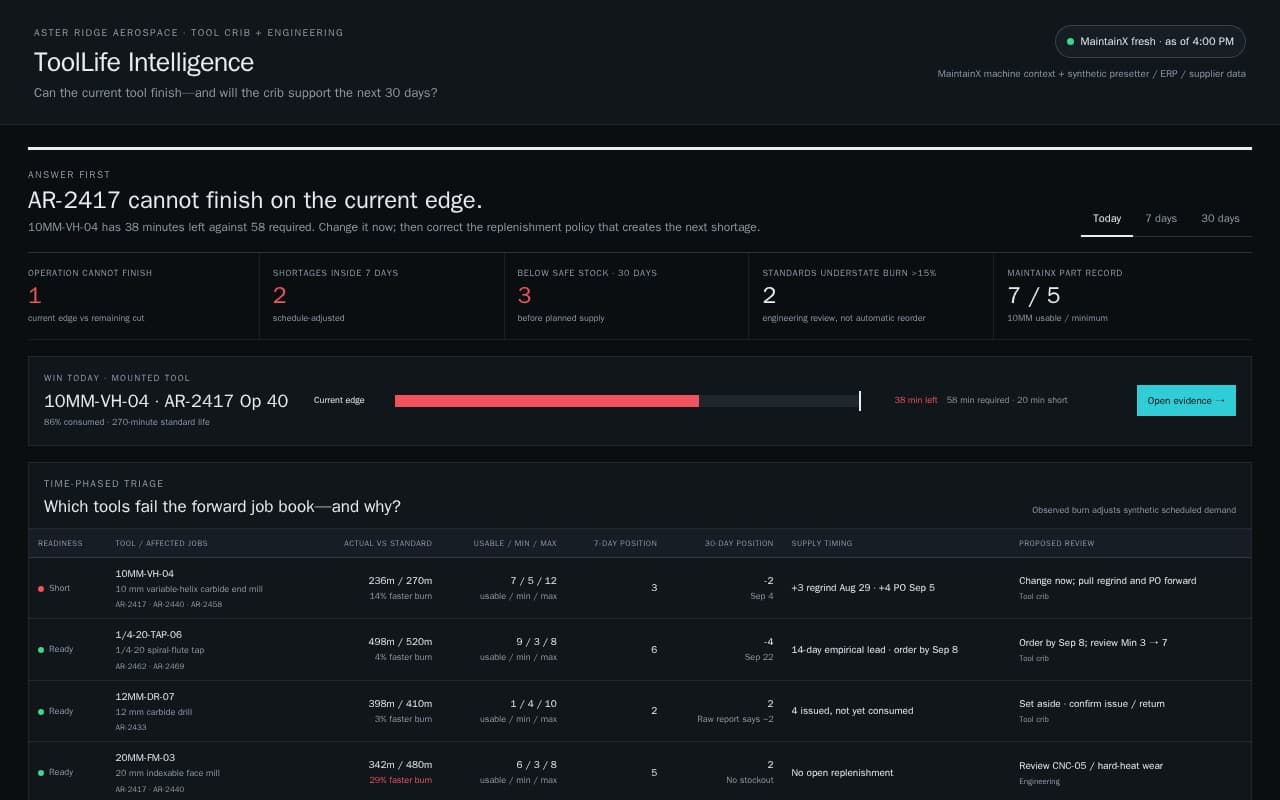
Tool Life Intelligence
Which tools are wearing early, and what does the schedule need in stock?
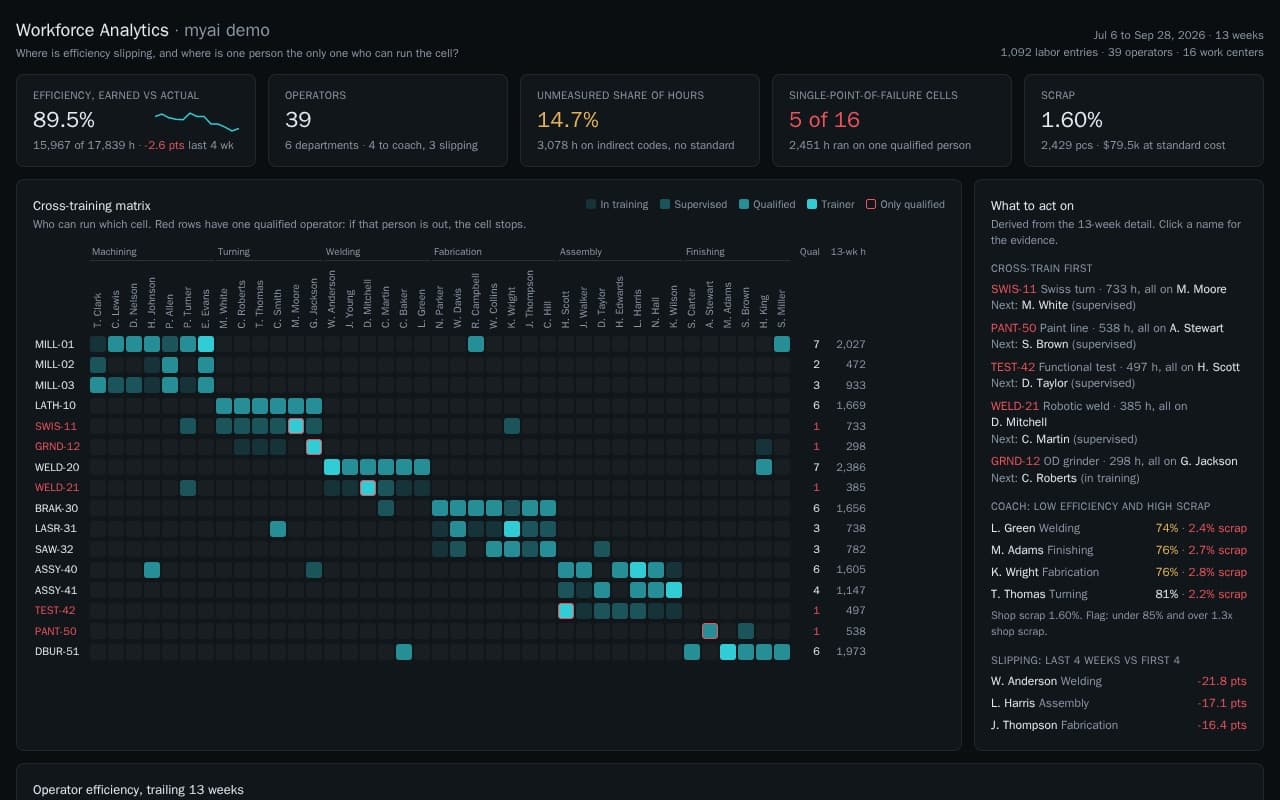
Workforce Analytics
Where is efficiency slipping, and where is one person the only one who can run the cell?
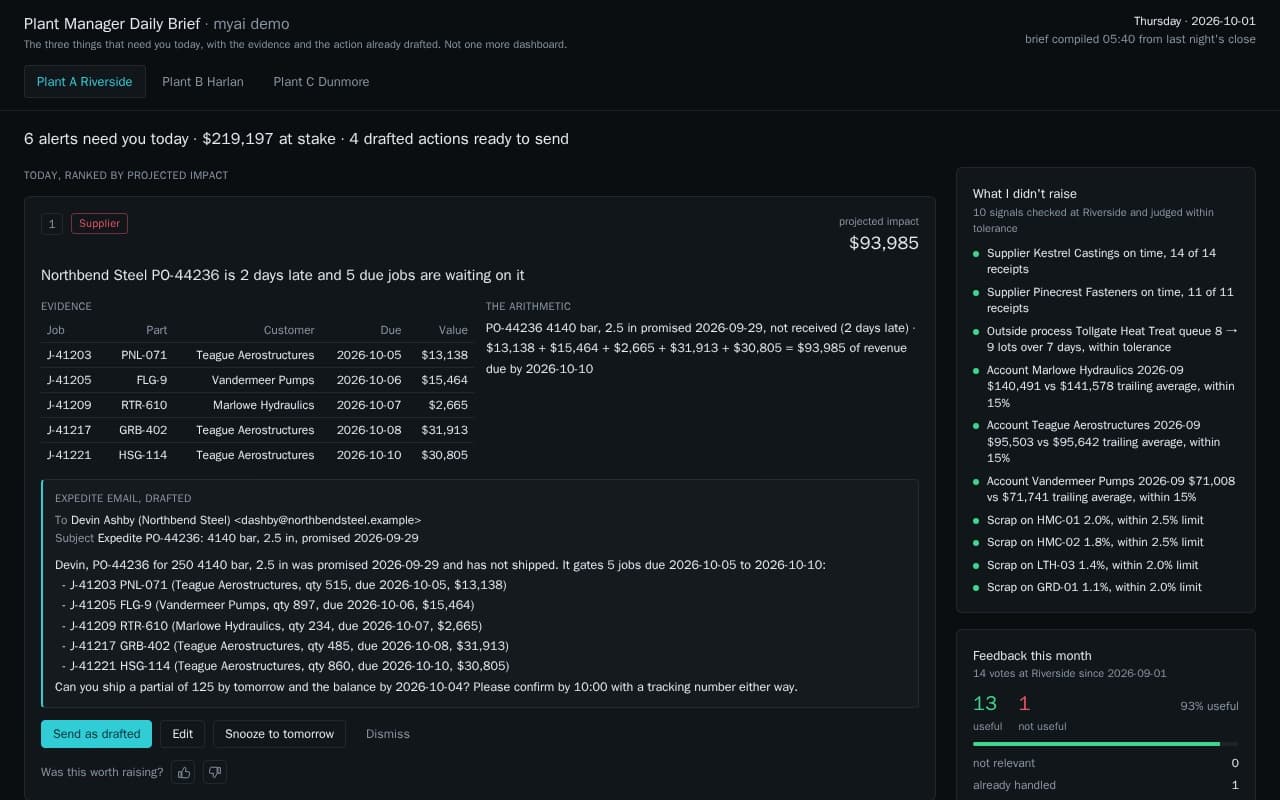
Plant Manager Daily Brief
What are the three things that need me today, and what is already drafted?
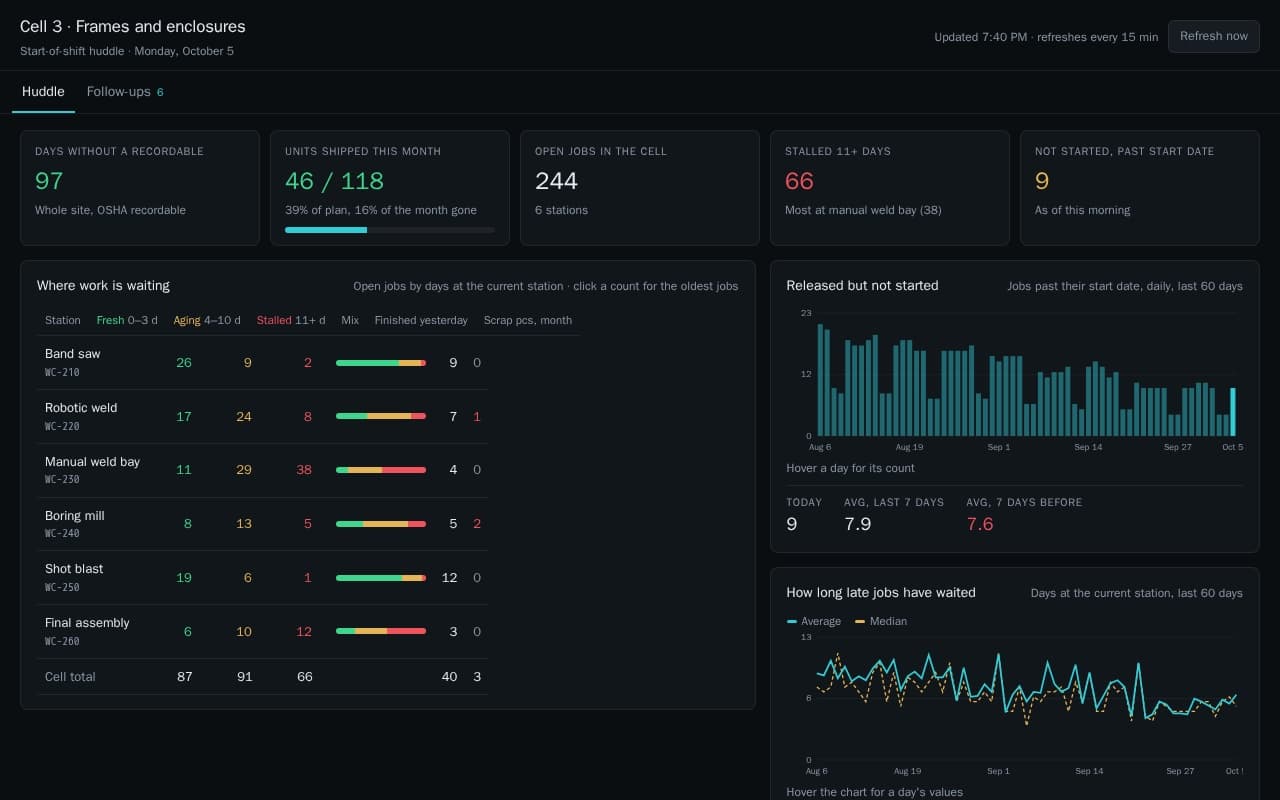
Cell Daily Standup
Where is work stuck in this cell, why, and who owns the fix today?
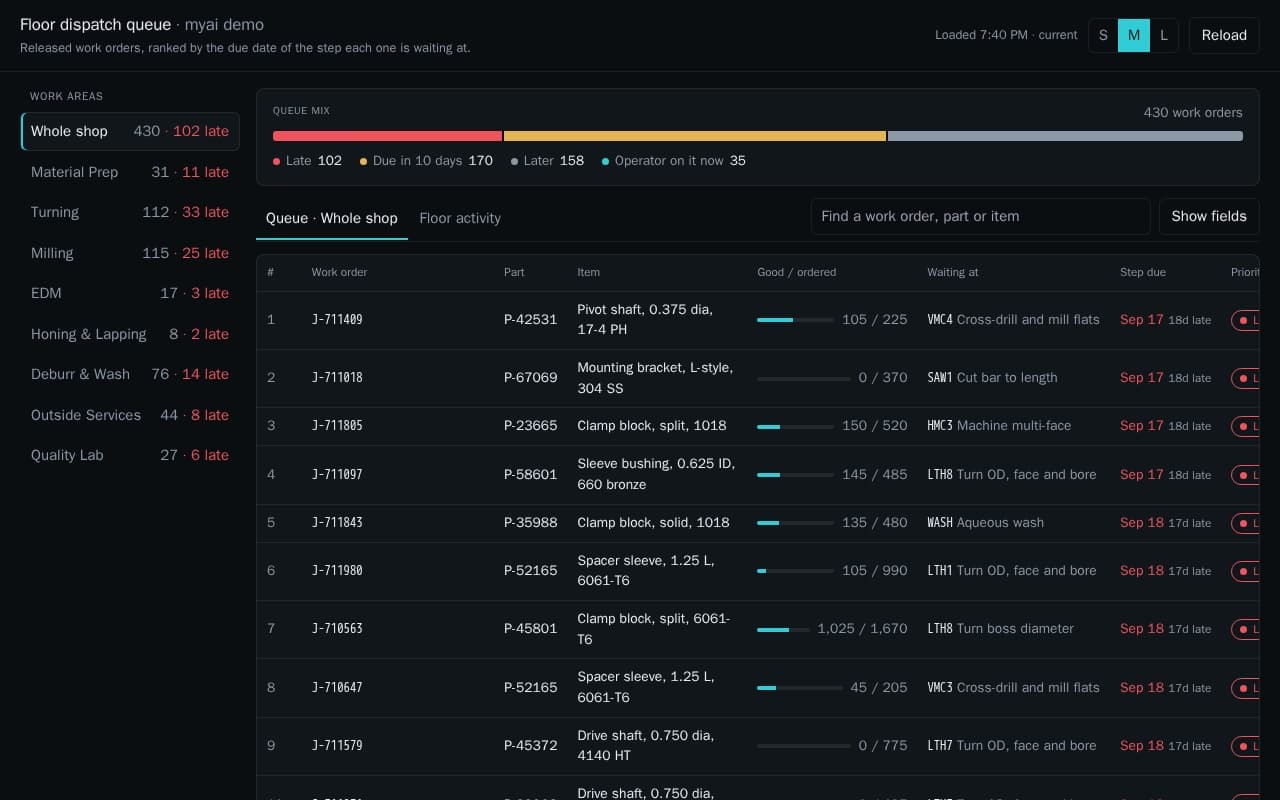
Floor Dispatch Queue
Which released work order should each area run next?
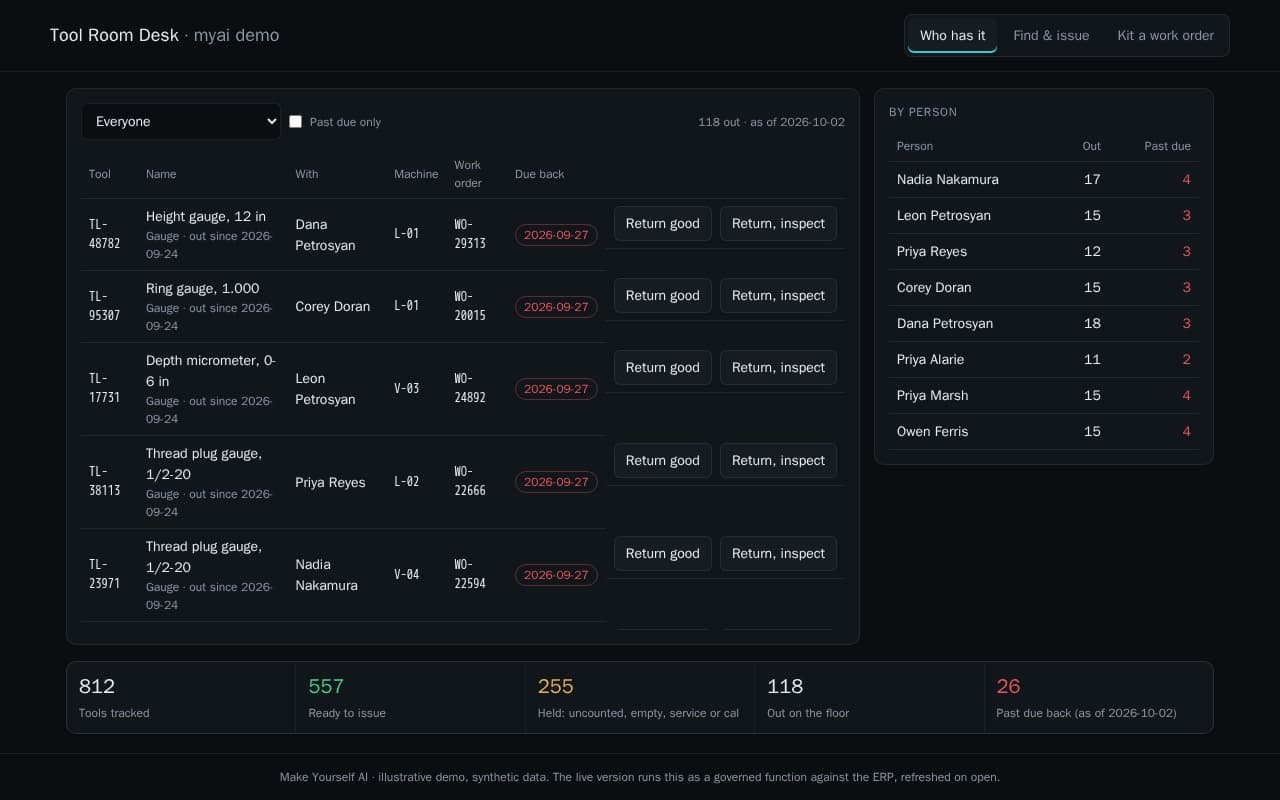
Tool Room Desk
Who has the tool, and is it ready for the next work order?
Supply chain
Planning, buying, suppliers, warehouses, and getting orders out the door.
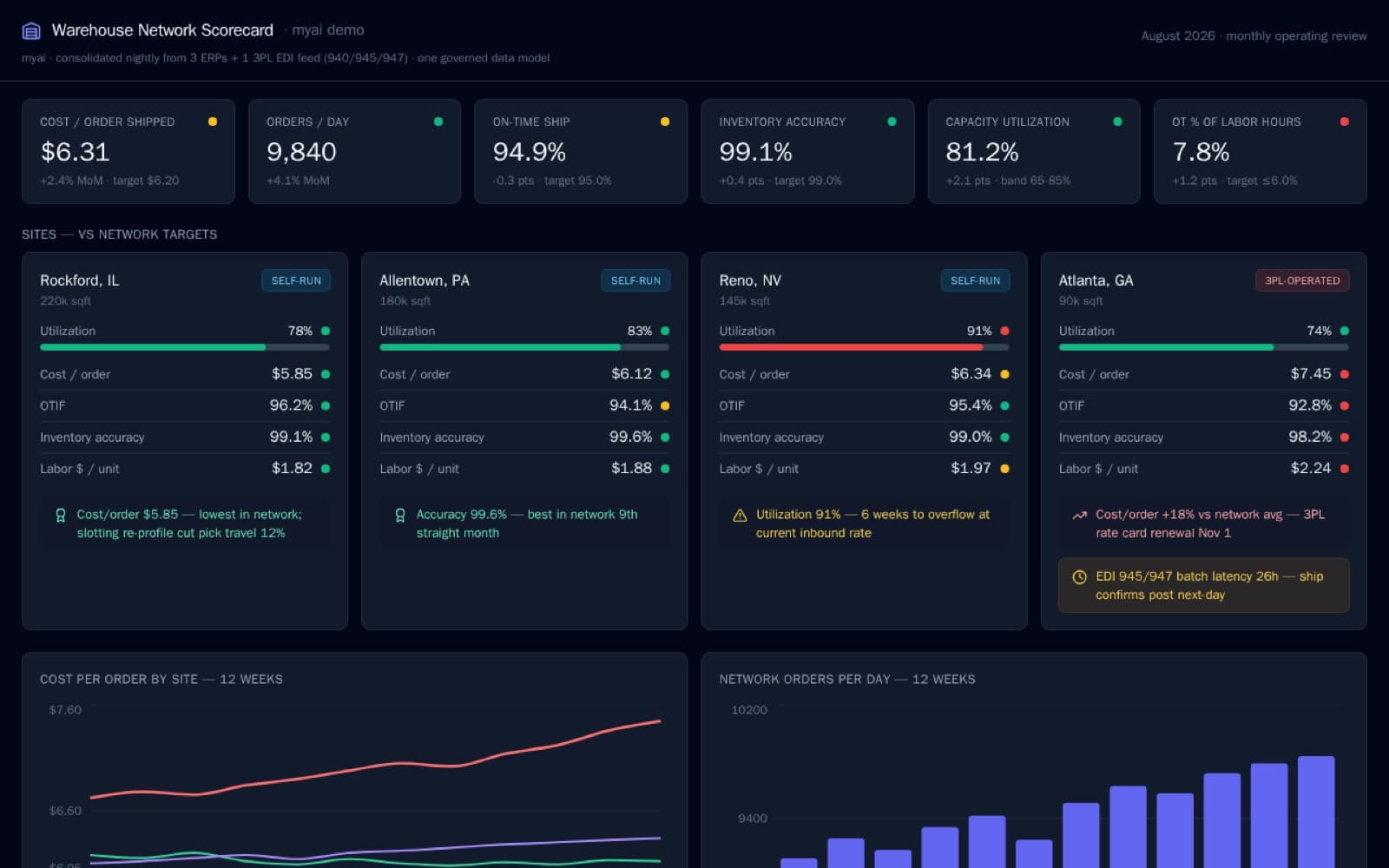
Warehouse Network Scorecard
Which site or partner is pulling the network off plan?
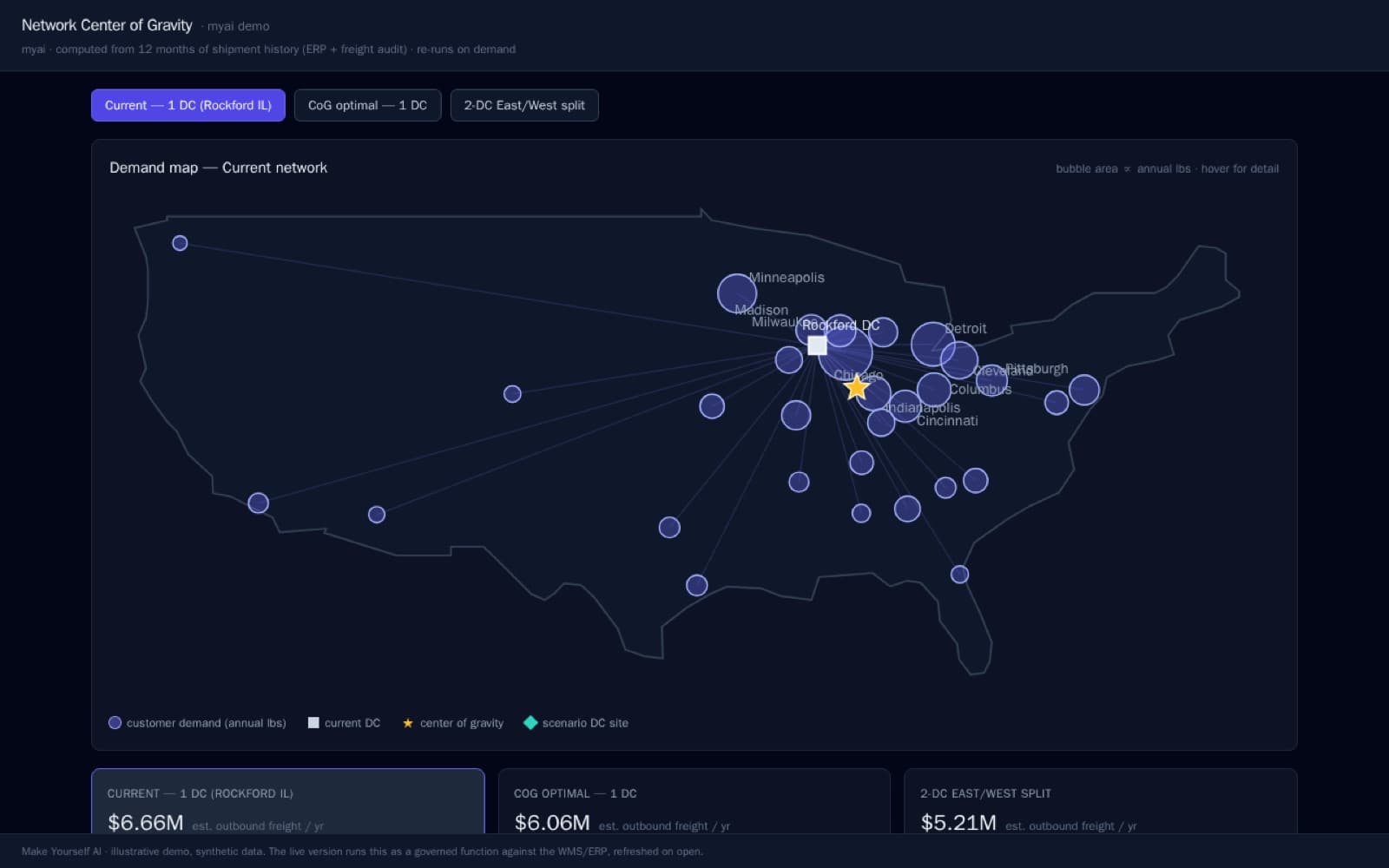
Network Center of Gravity
How does the network change when demand or freight assumptions move?
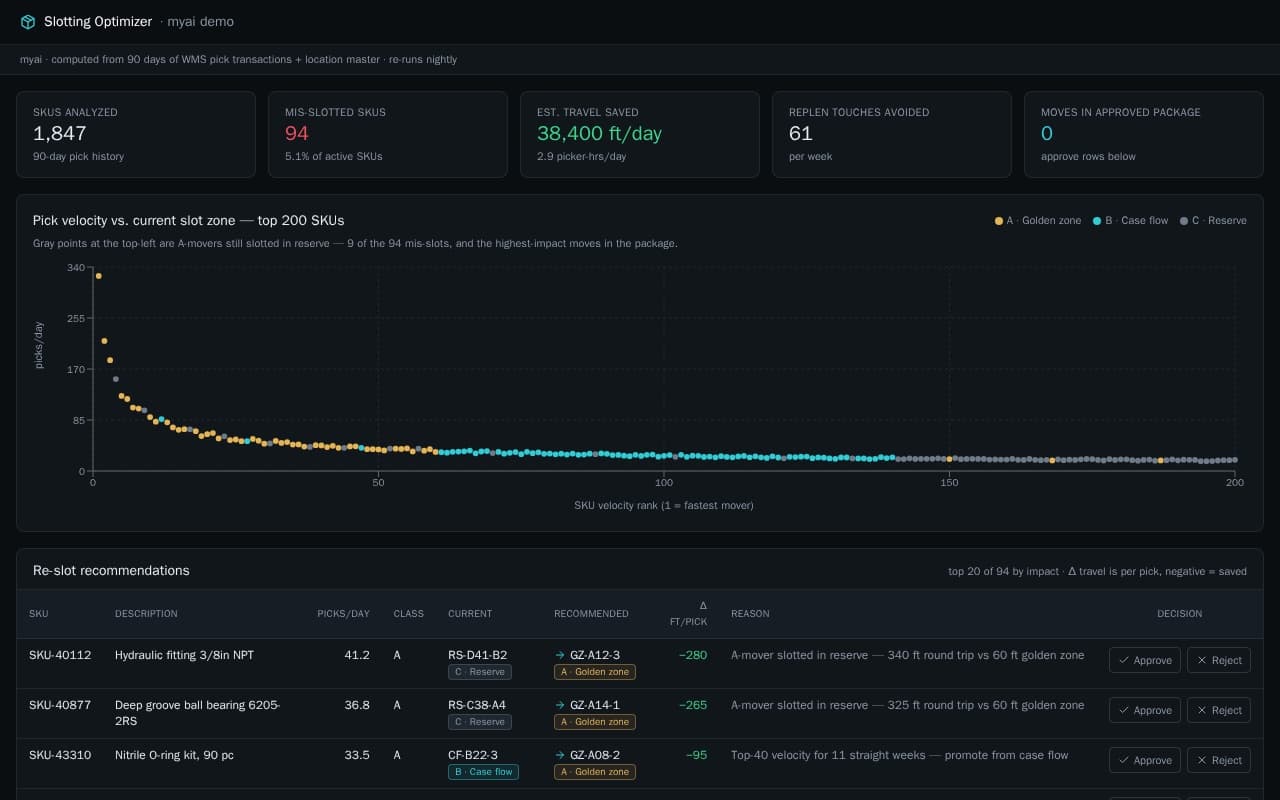
Slotting Optimizer
Which re-slot moves save the most travel next?
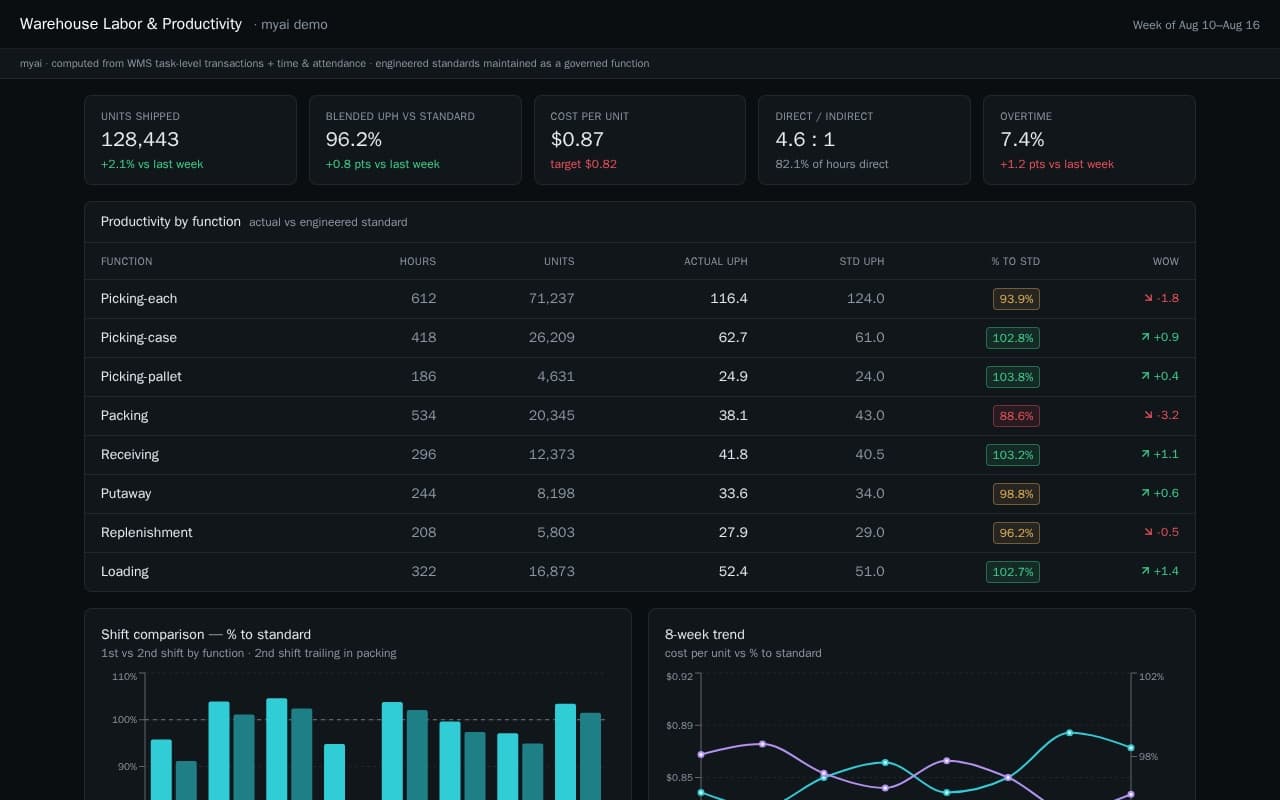
Warehouse Labor & Productivity
Where is the shift missing its engineered standard?
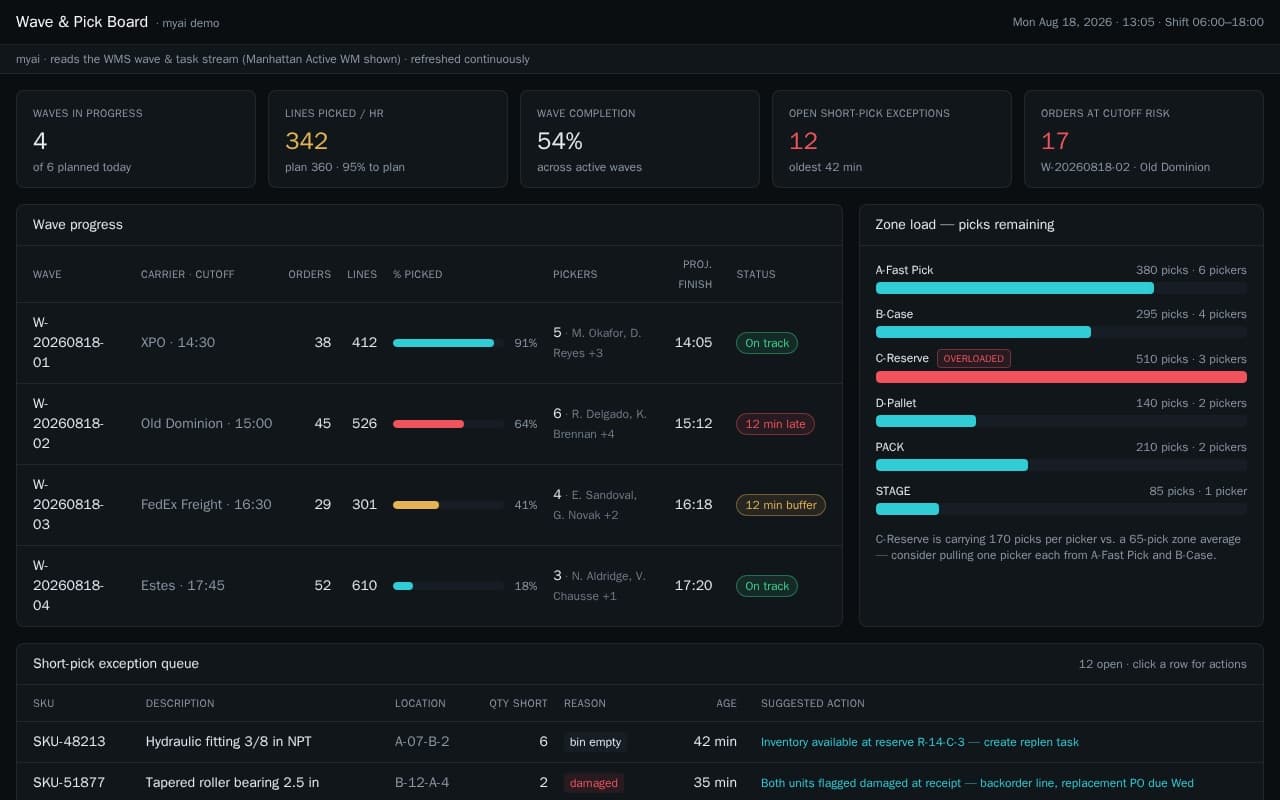
Wave & Pick Board
Which exception threatens the next carrier cutoff?
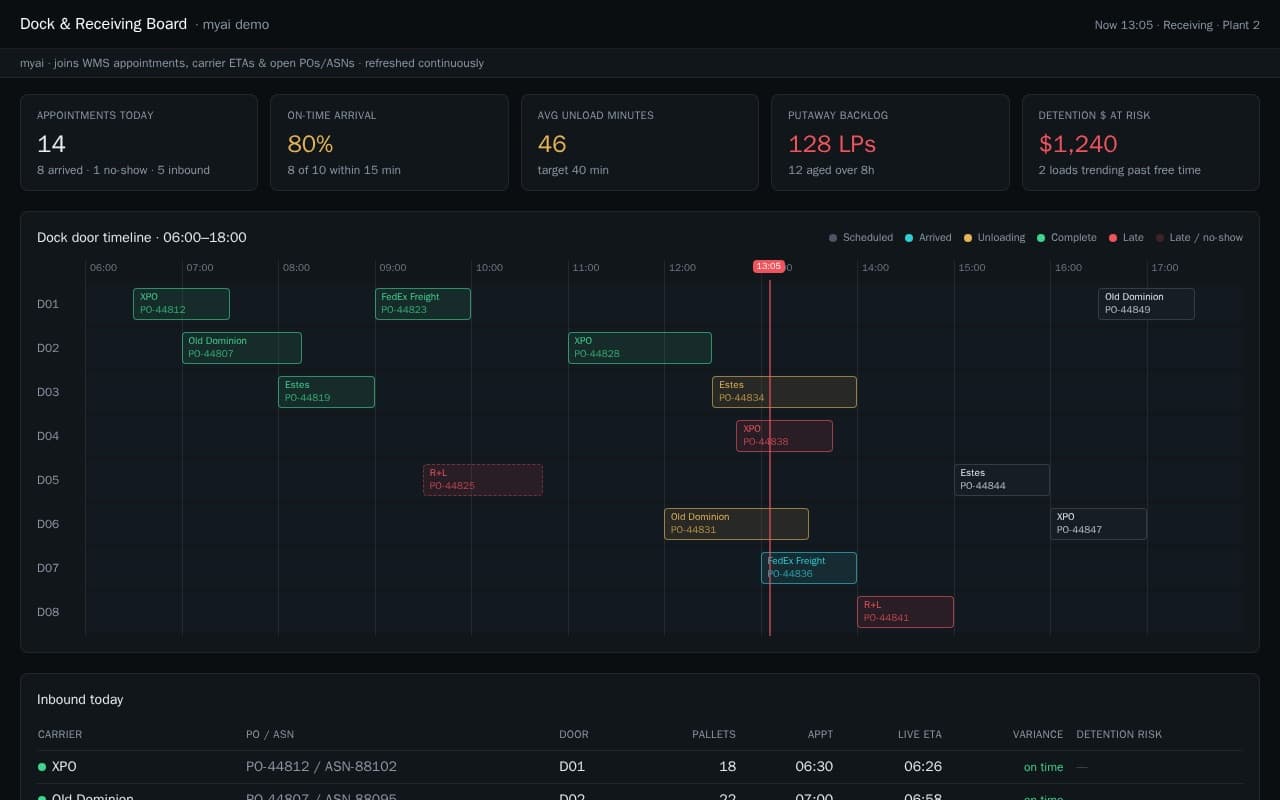
Dock & Receiving Board
Which late truck or door conflict needs attention now?
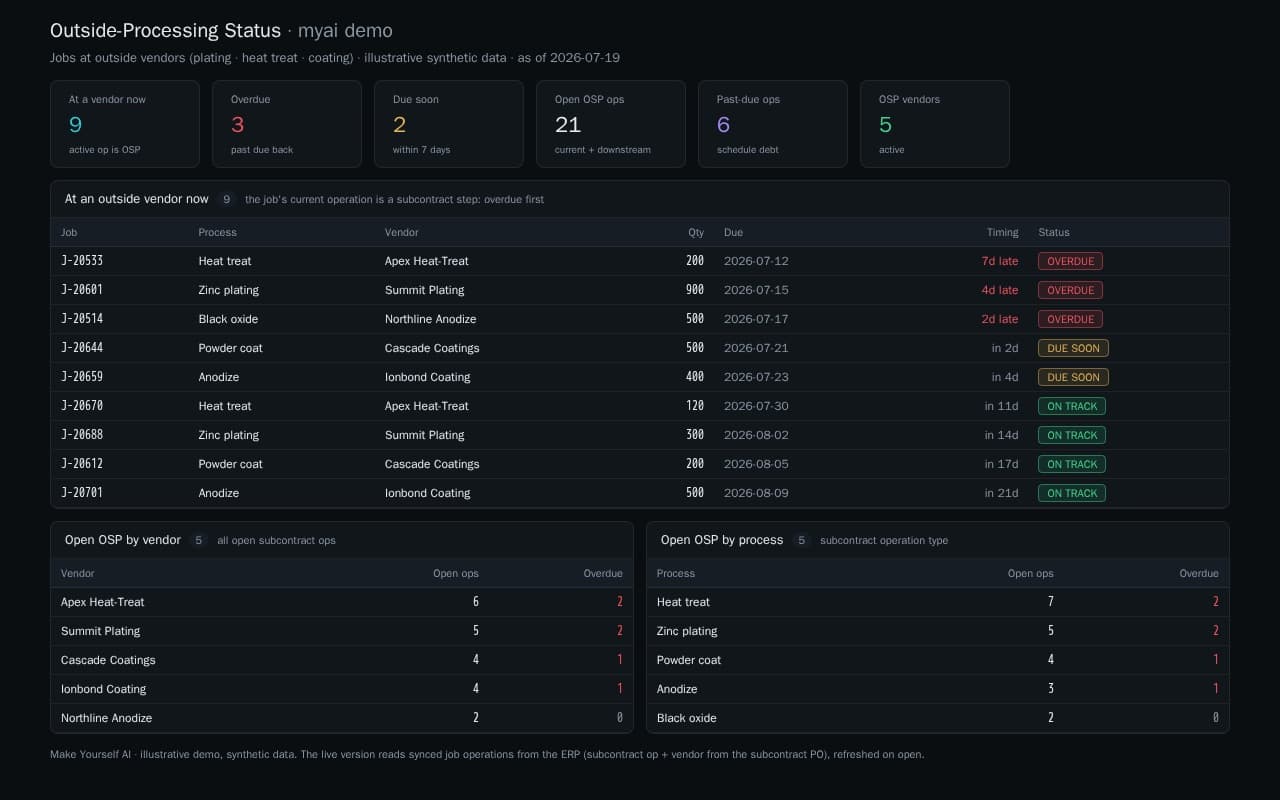
Outside-Processing Status
Which jobs at outside vendors are late, and which ship dates do they threaten?
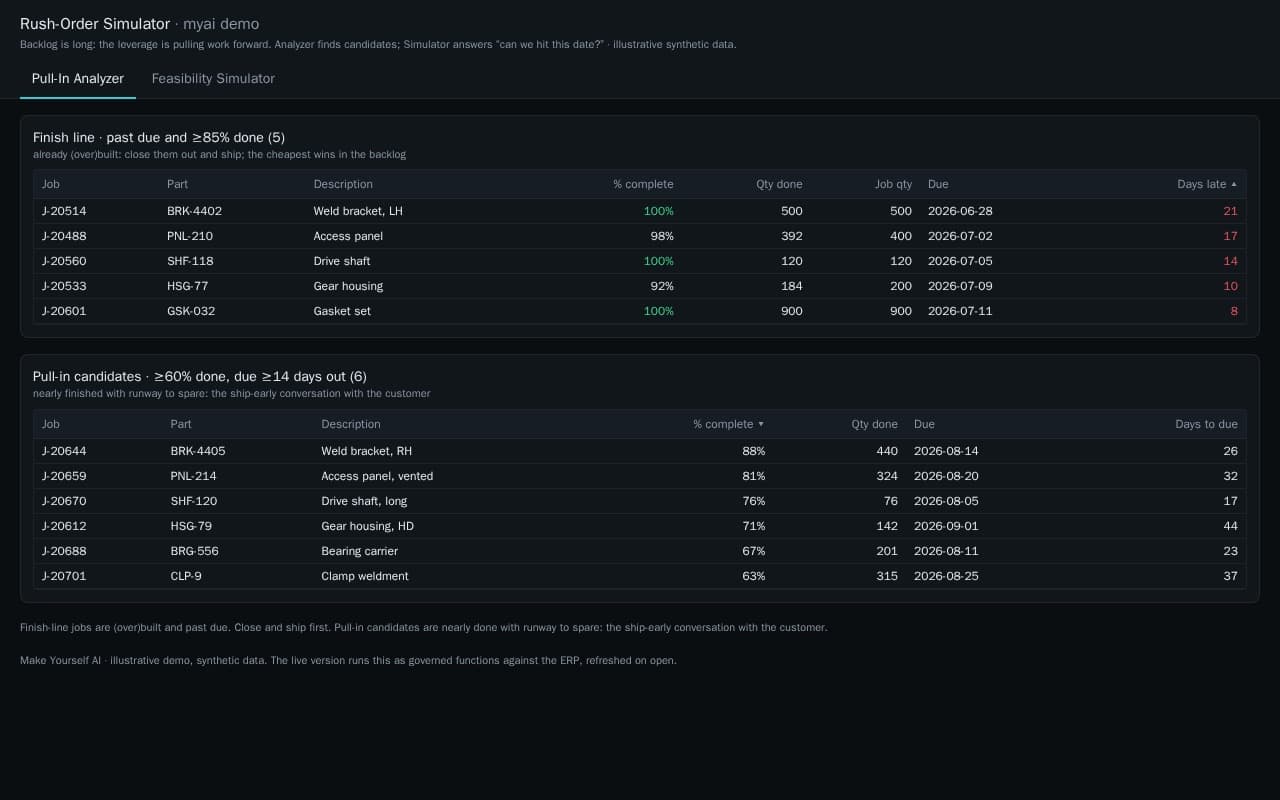
Rush-Order Simulator
Can we take this rush order without missing what we already promised?
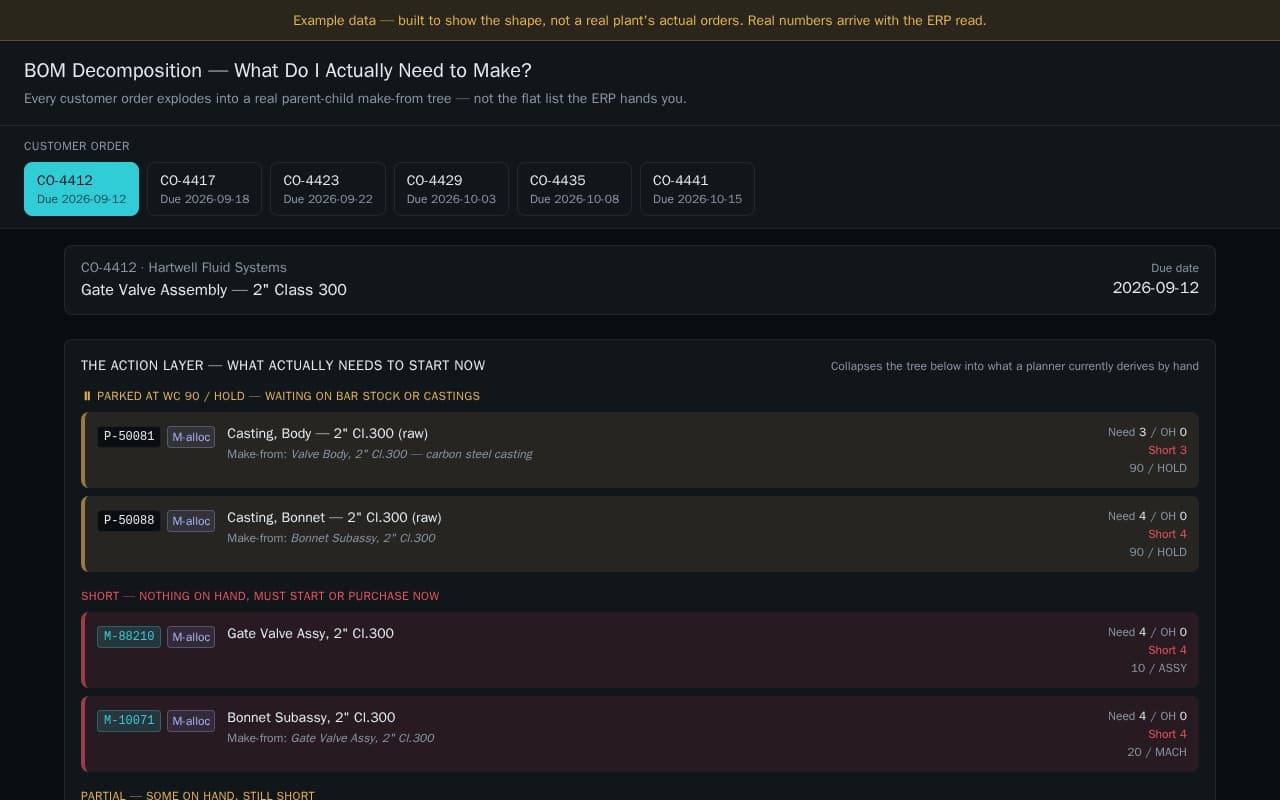
BOM Decomposition
What do I actually need to make for this order, and what is short?
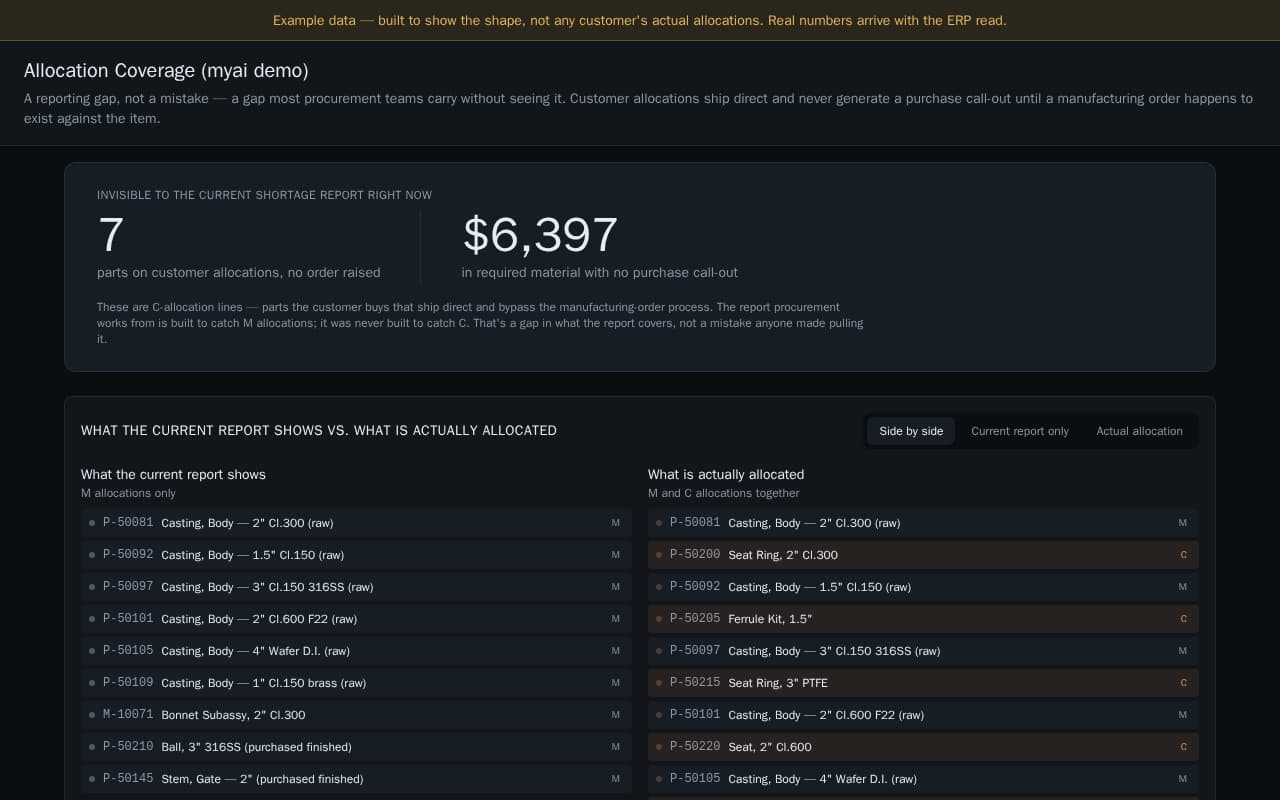
Allocation Coverage
Which allocated parts will never trigger a purchase until it is too late?
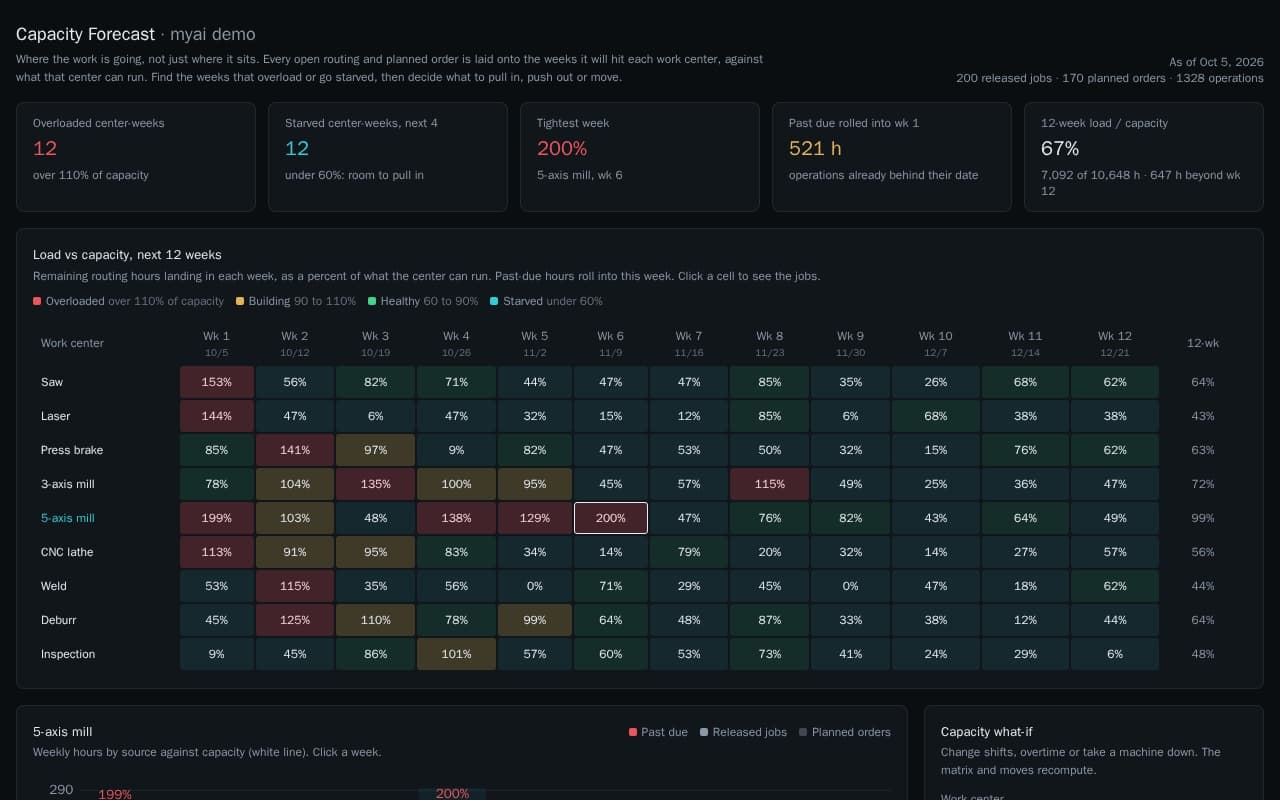
Capacity Forecast
Which work centers will be overloaded or starved in the coming weeks, and what should move?
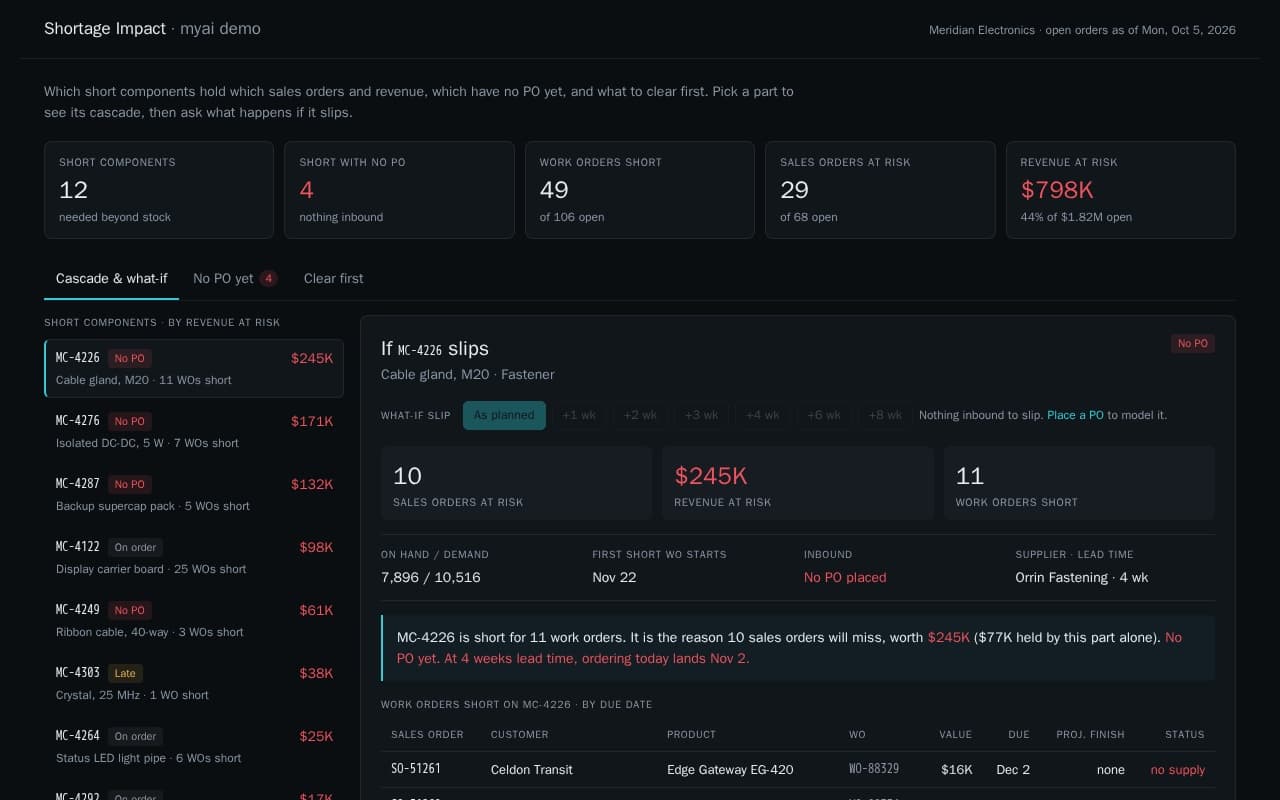
Shortage Impact
Which short components put which sales orders and revenue at risk, and what clears them first?
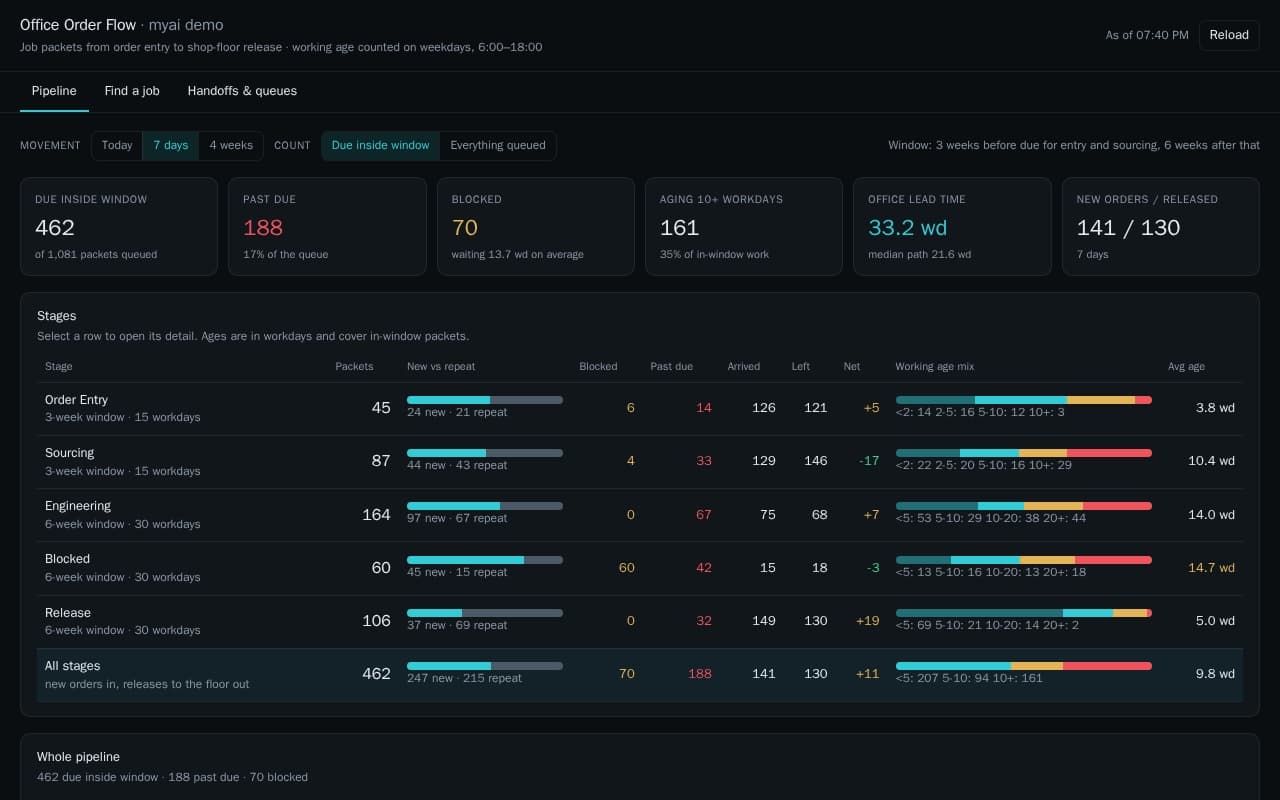
Office Order Flow
Where are orders sitting in the office before they reach the floor?
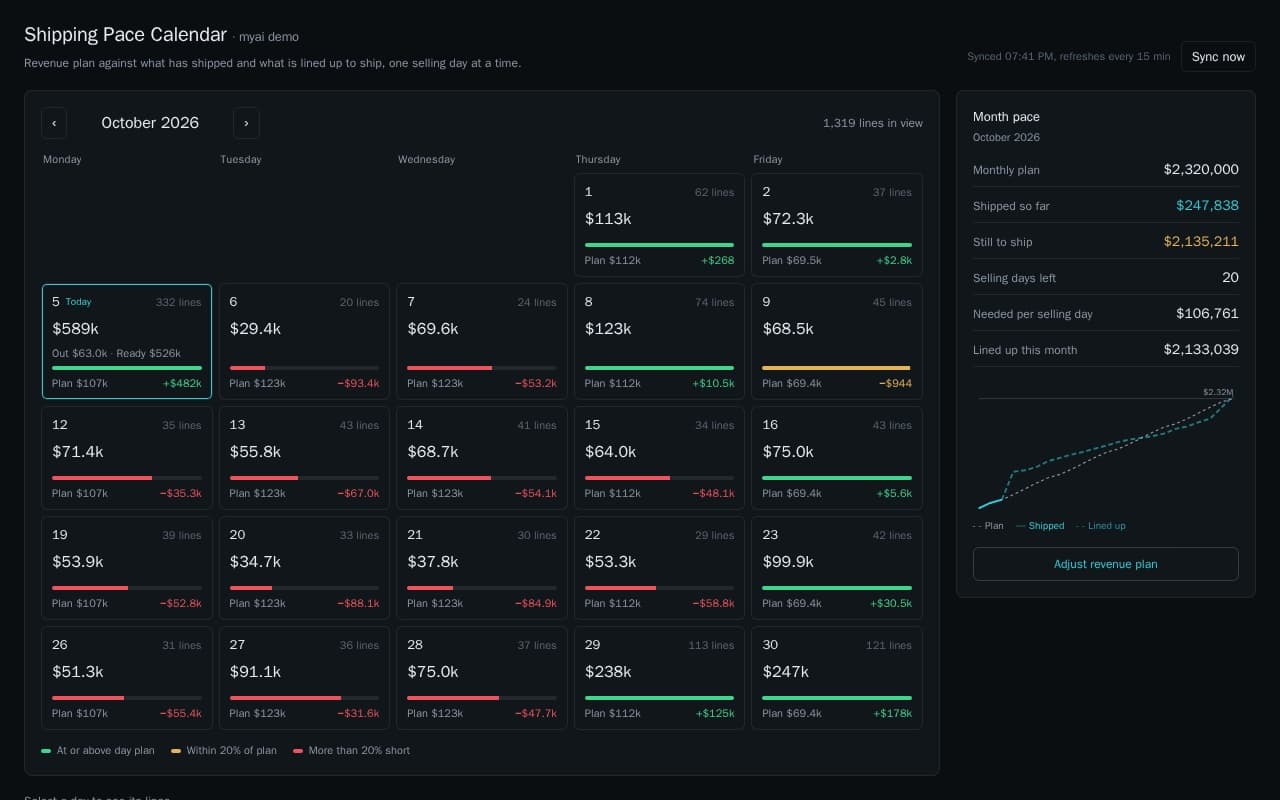
Shipping Pace Calendar
Will we hit this month's revenue plan, and what does each remaining day need to ship?
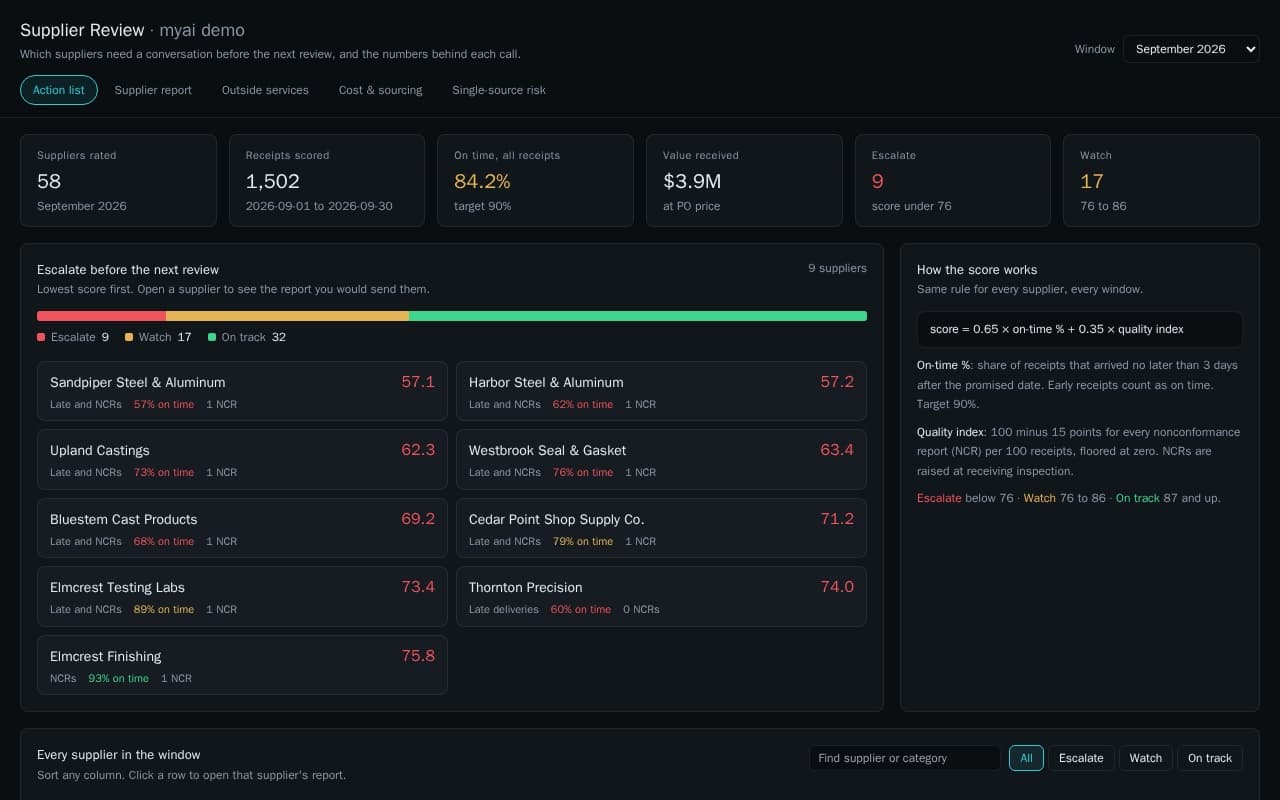
Supplier Scorecard
Which suppliers need a conversation before the next review?
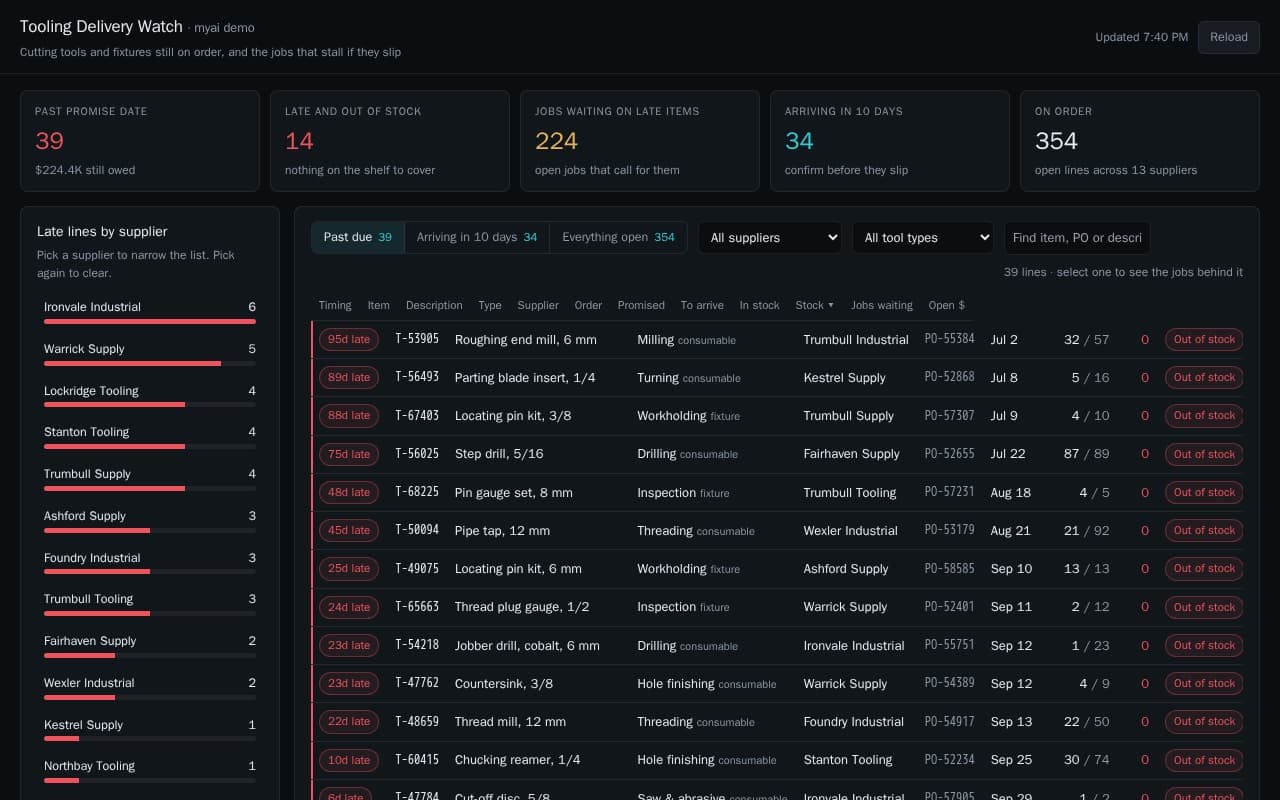
Tooling Delivery Watch
Which tooling deliveries are late, and which jobs stall if they slip?
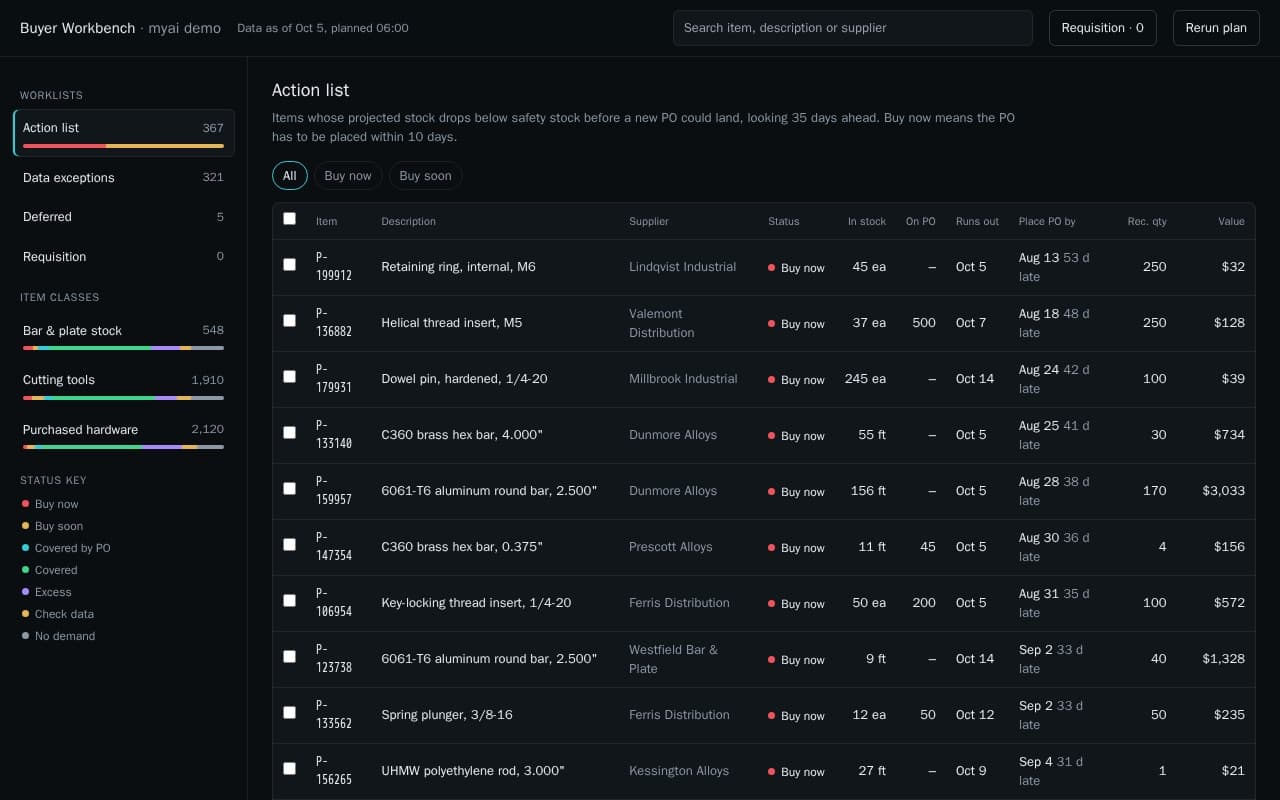
Buyer Workbench
What should the buyer place or expedite today, before stock runs out?
Sales and quoting
Quotes, pricing, incoming orders, and growth with existing accounts.
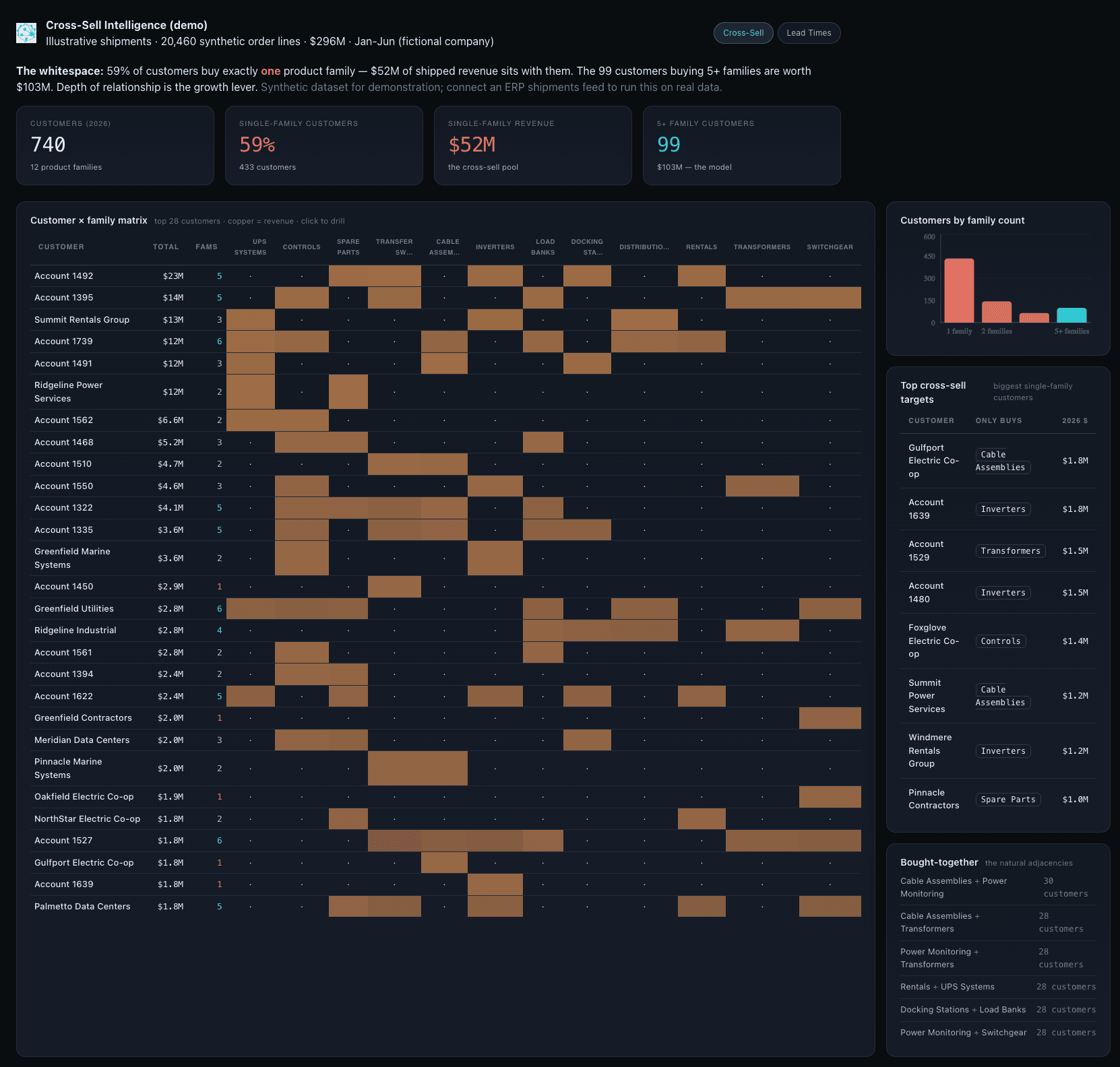
Cross-Sell Intelligence
Where does an existing customer already have a reason to buy more?
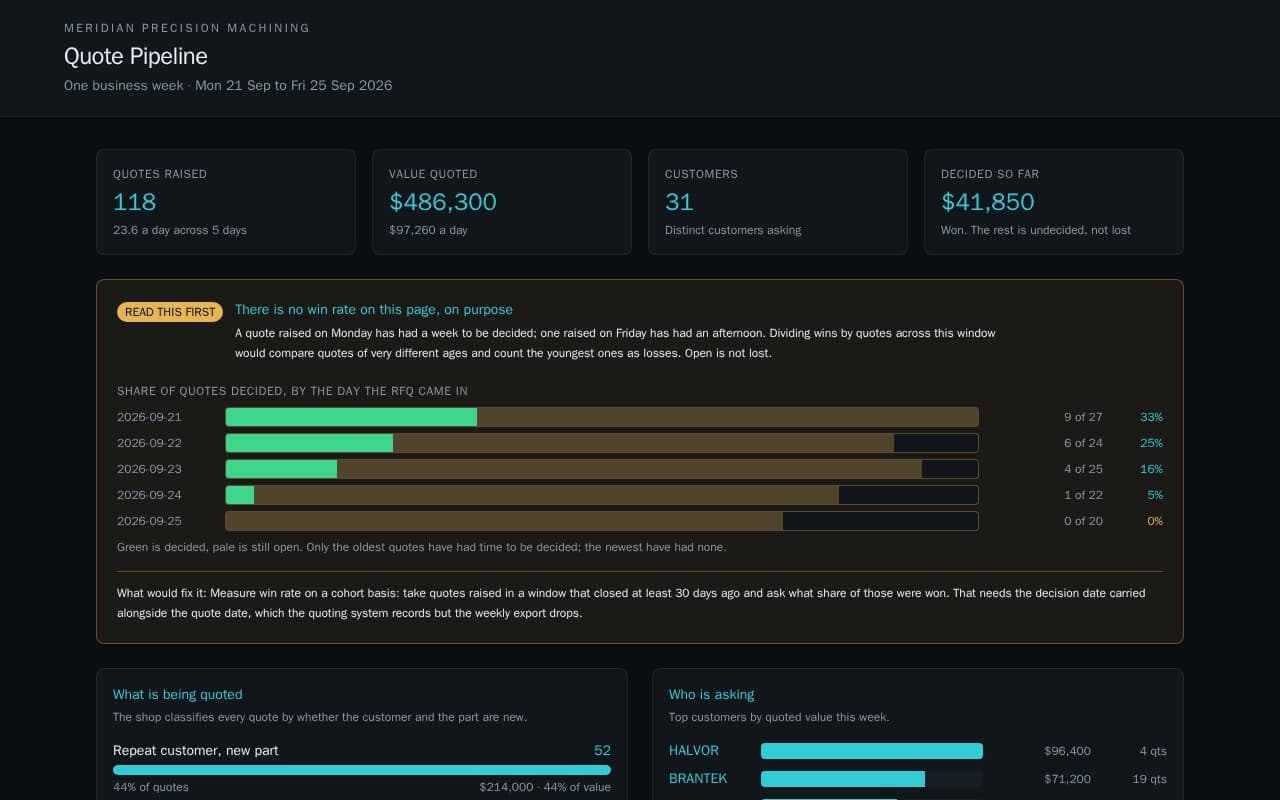
Quote Pipeline
What did we quote this week, who is asking, and can the shop actually build it?
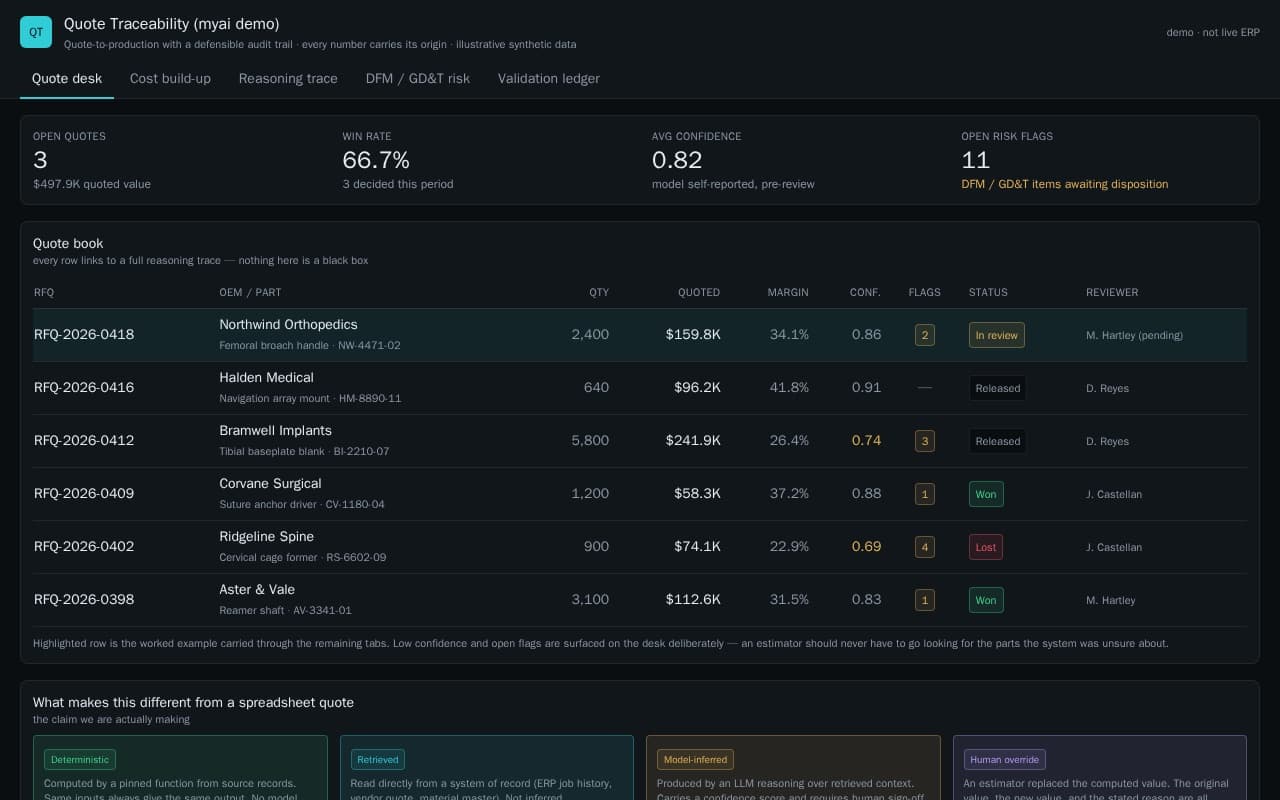
Quote Traceability
Where did every number in this quote come from, and who signed off on it?
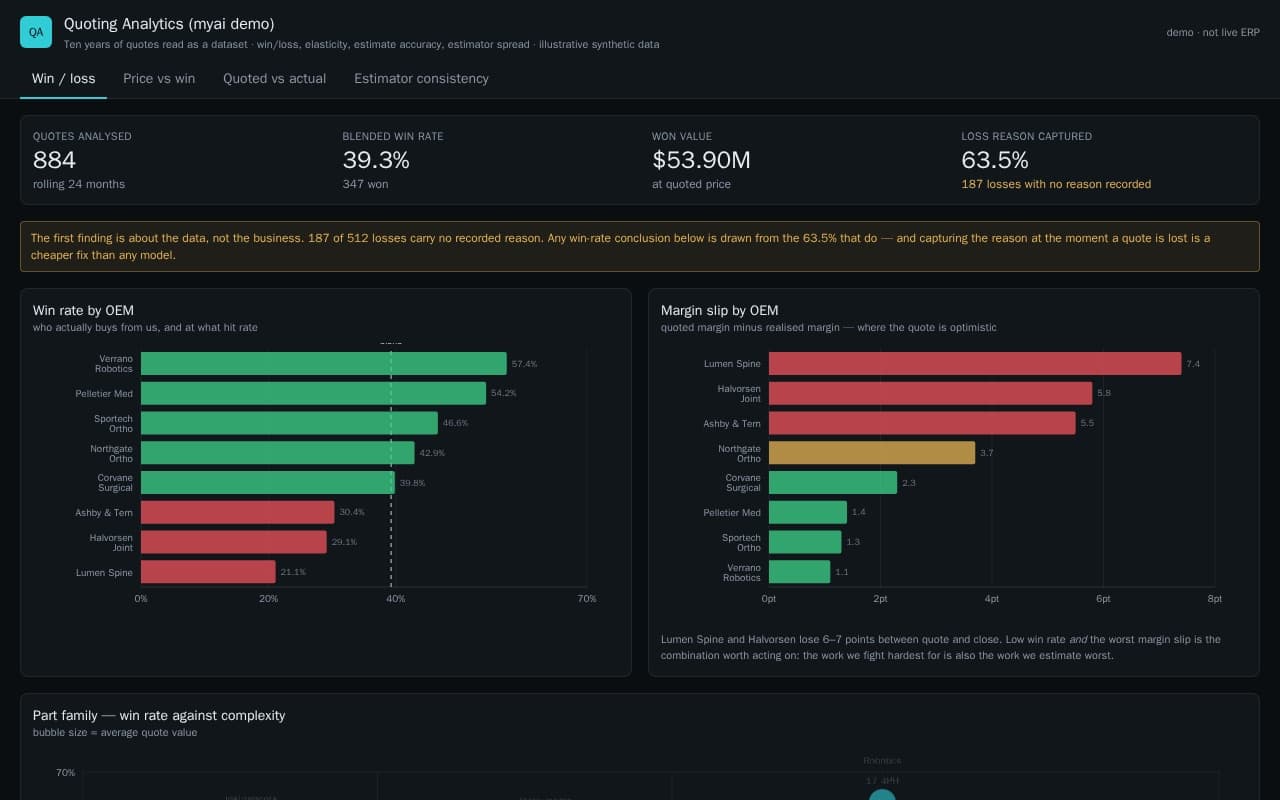
Quoting Analytics
Where are we losing quotes we could have won, and which estimates drift after close?
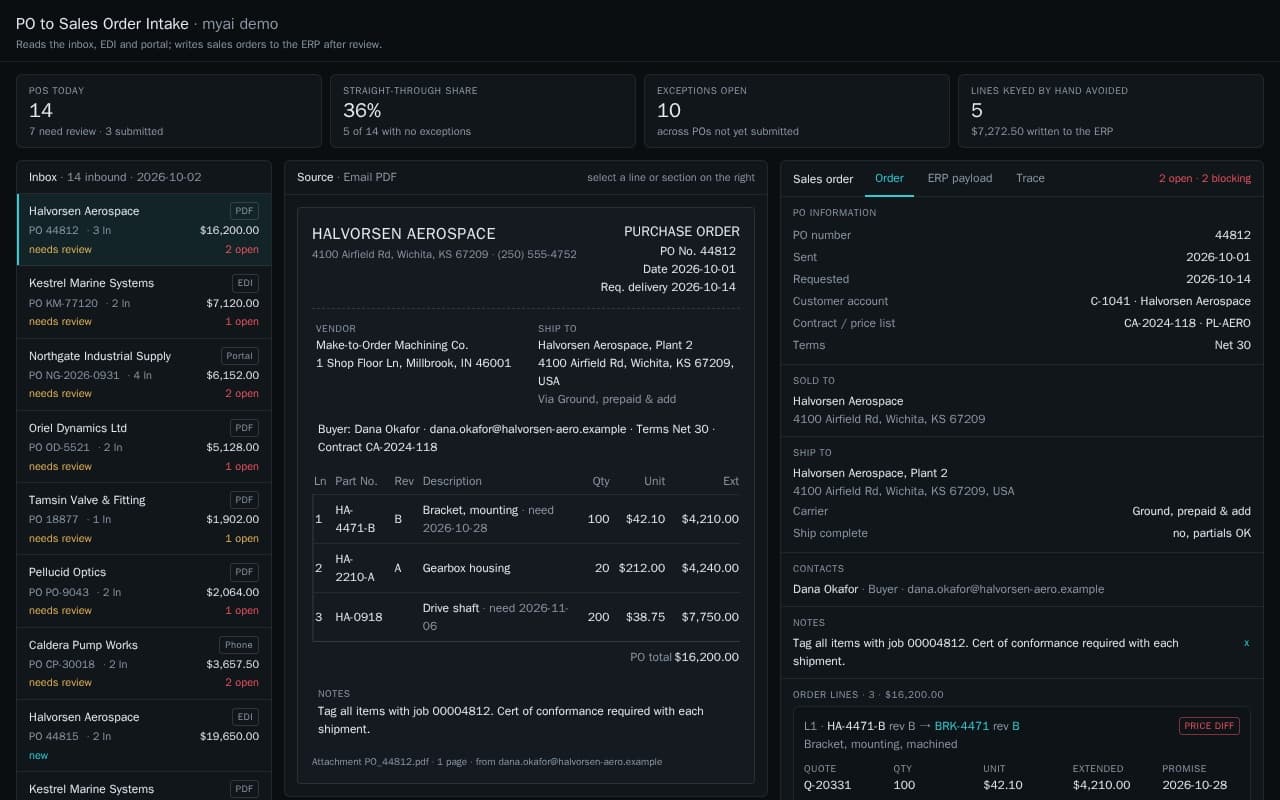
PO to Sales Order Intake
Which incoming POs can post straight to the ERP, and which need a person first?
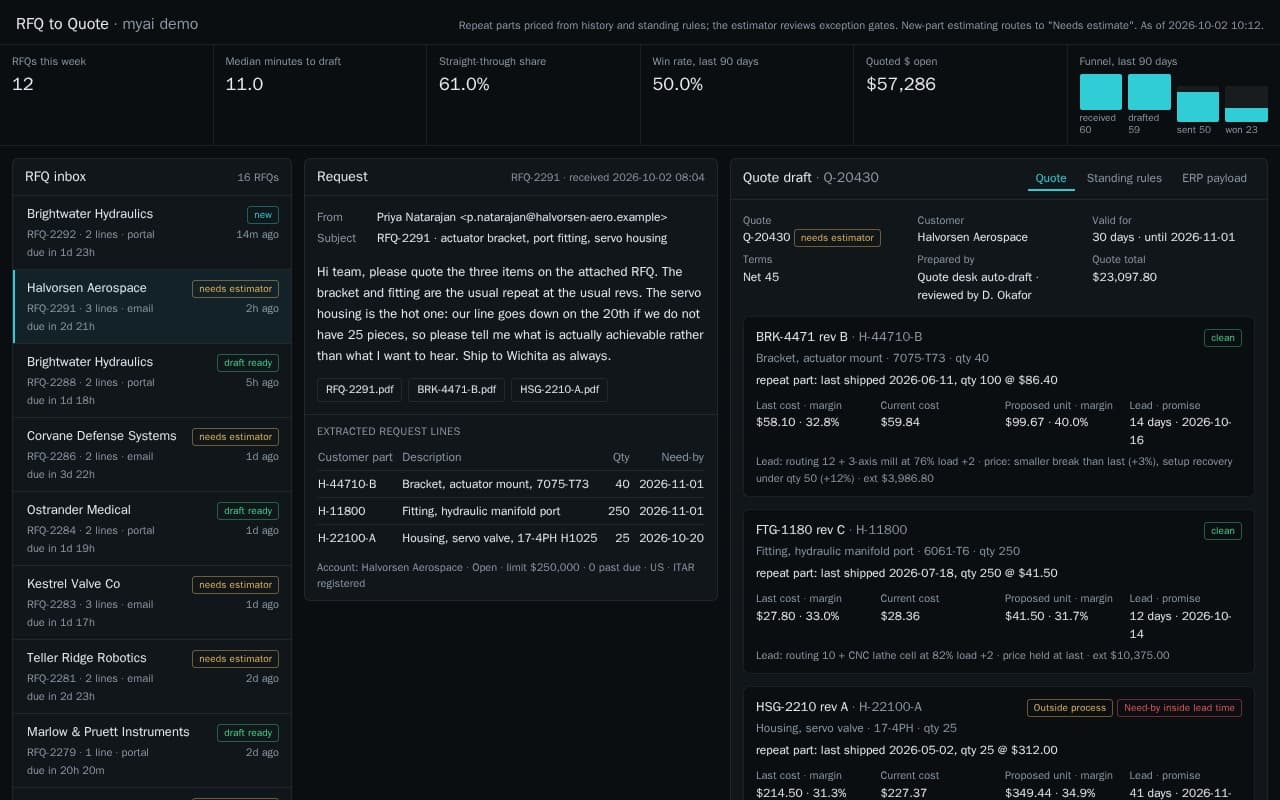
RFQ to Quote
Can this repeat-part RFQ go out today, and what has to be checked first?
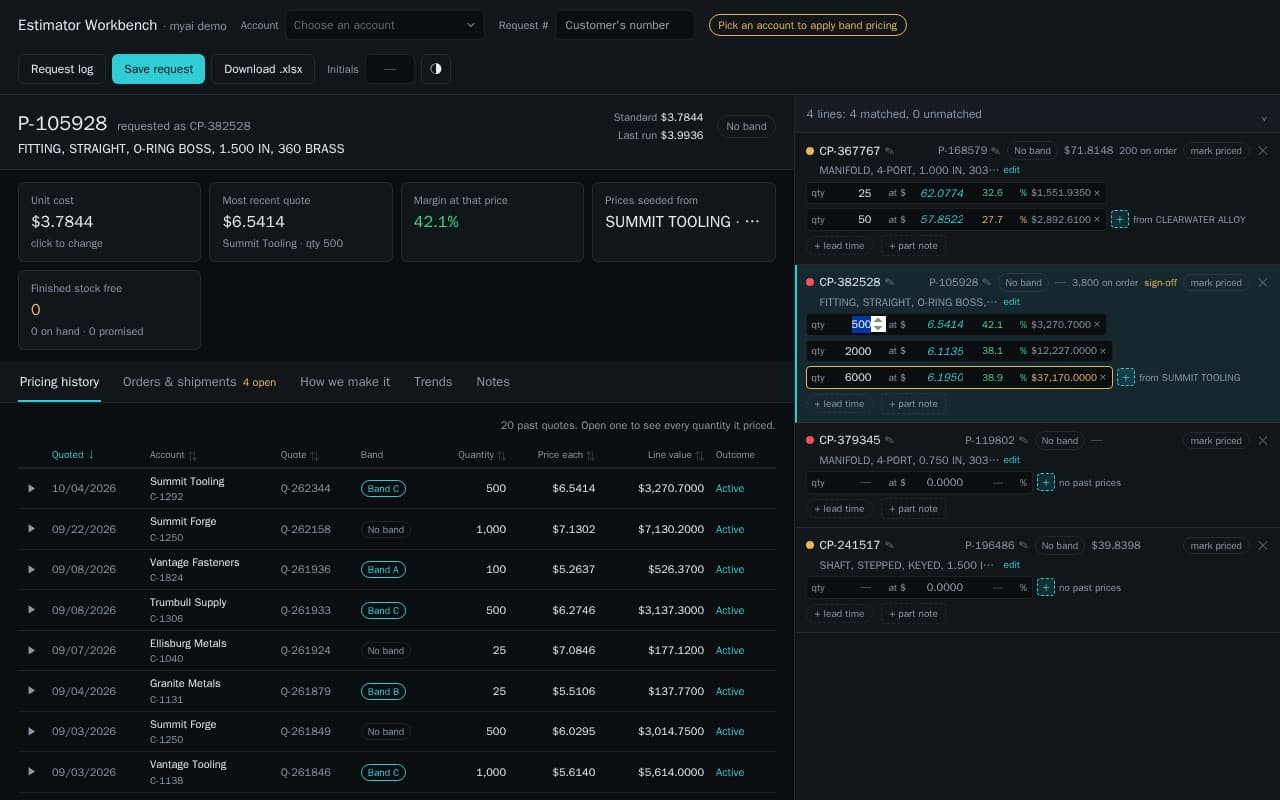
Estimator Workbench
What should we quote for this part, for this account, at this quantity?
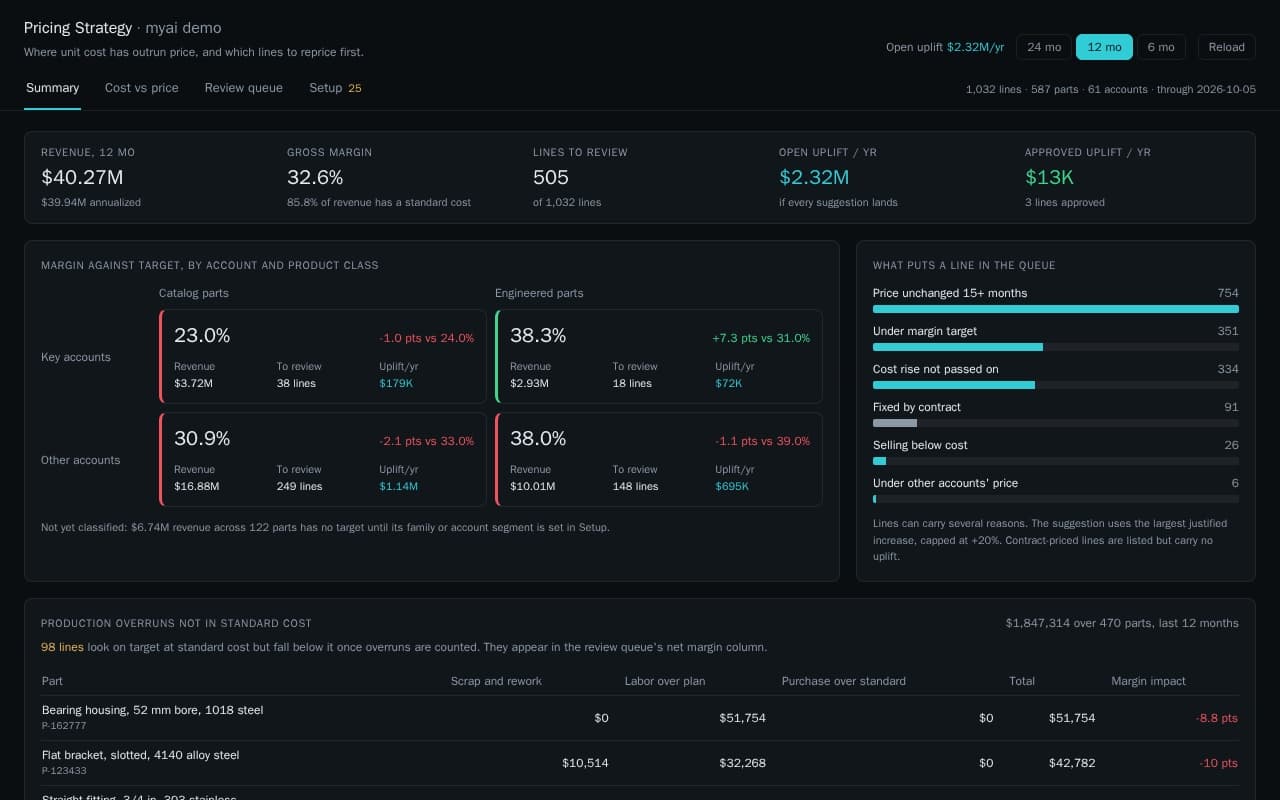
Pricing Strategy
Where has unit cost outrun price, and which lines should we reprice first?
Engineering and quality
Engineering change, quality records, and audit-ready traceability.
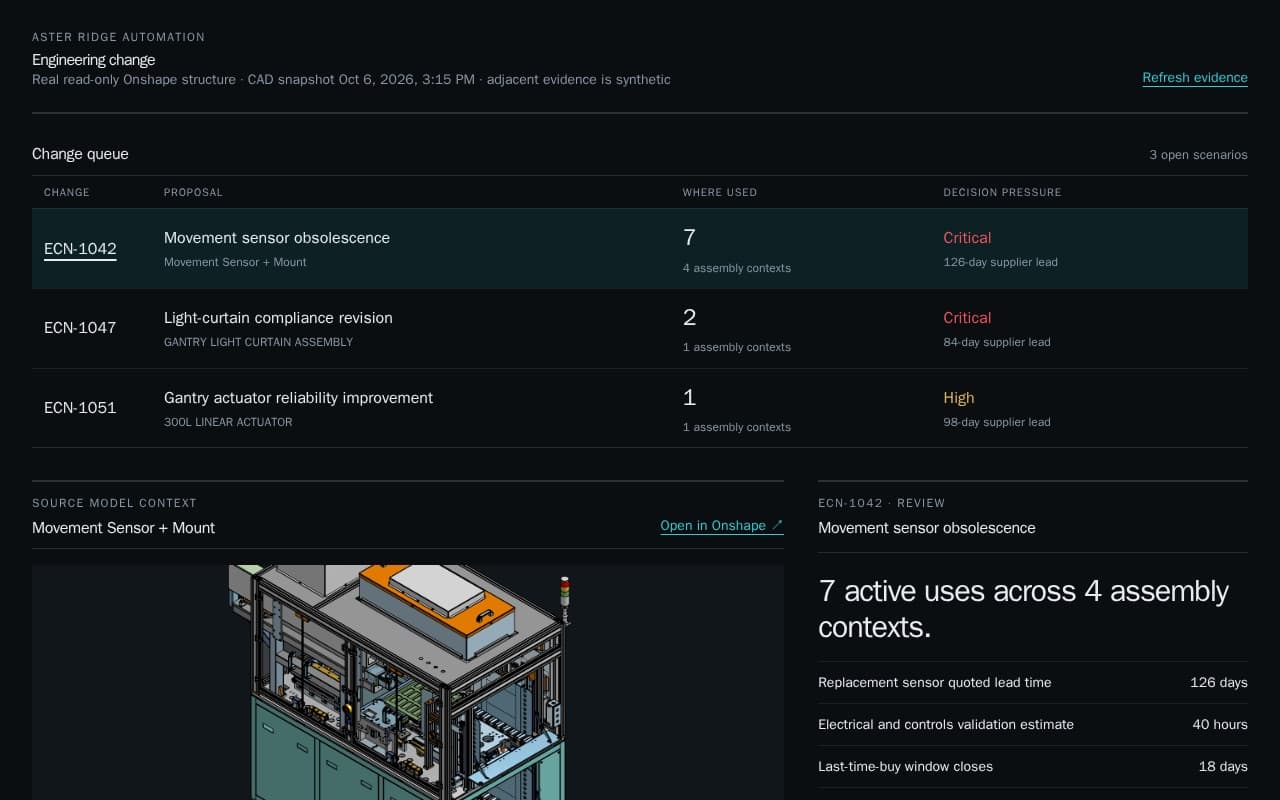
Engineering Change
What does this change touch, and what does it cost to carry it through?
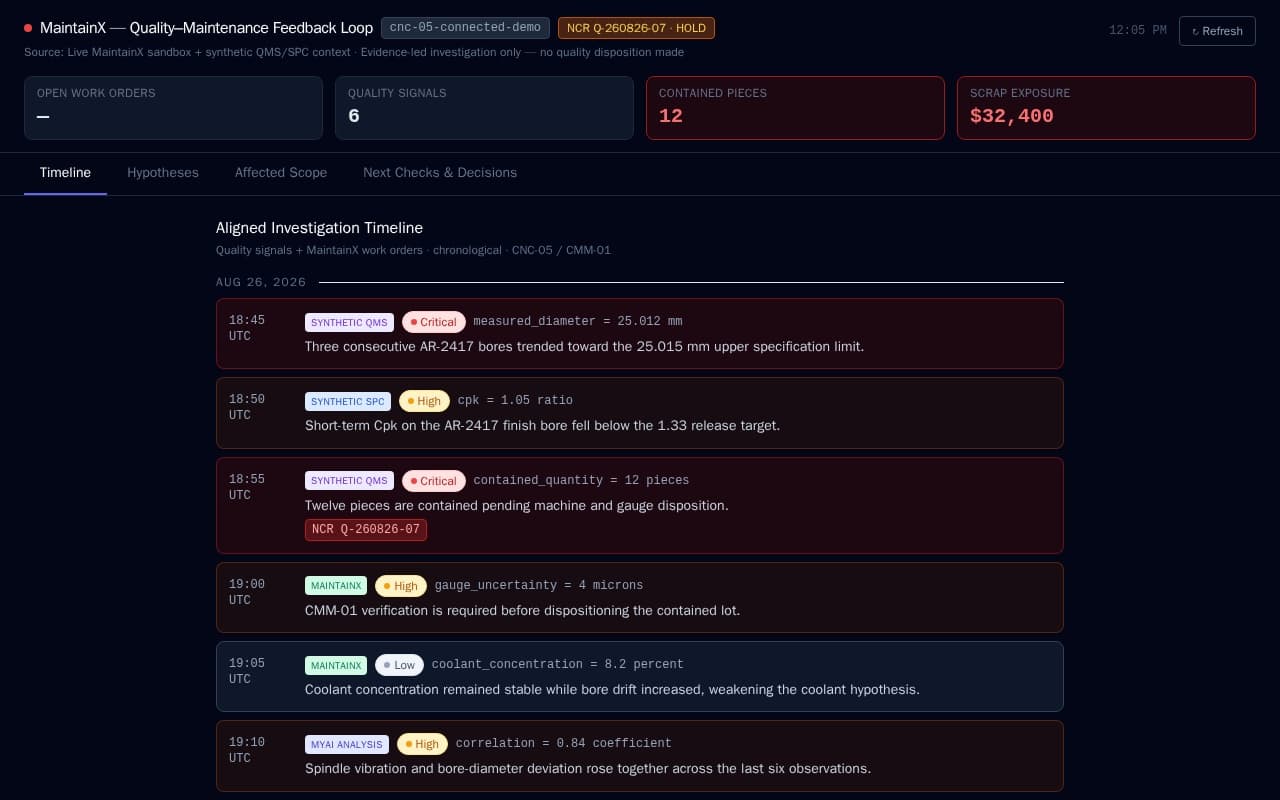
Quality and Maintenance Feedback Loop
Is this quality drift a machine condition problem?
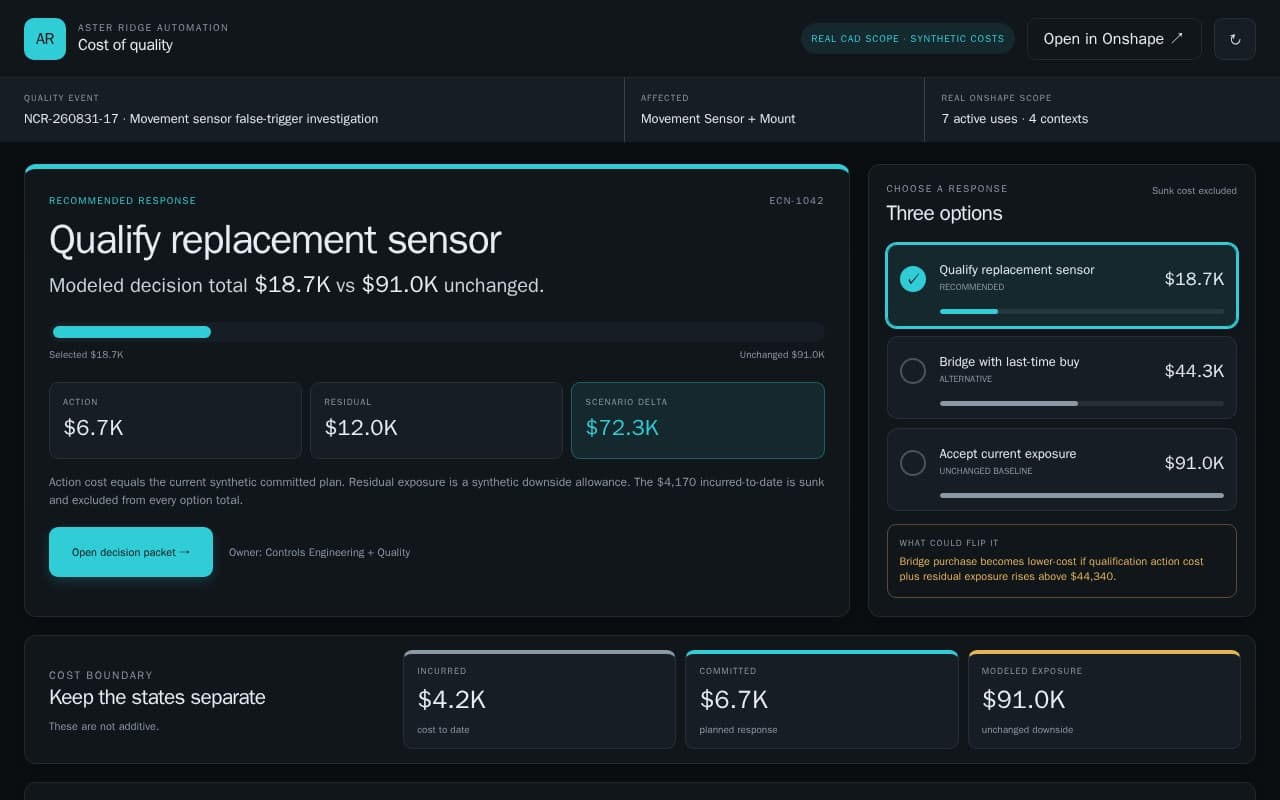
Cost of Quality
Which response to this quality event costs the least across the whole exposure?
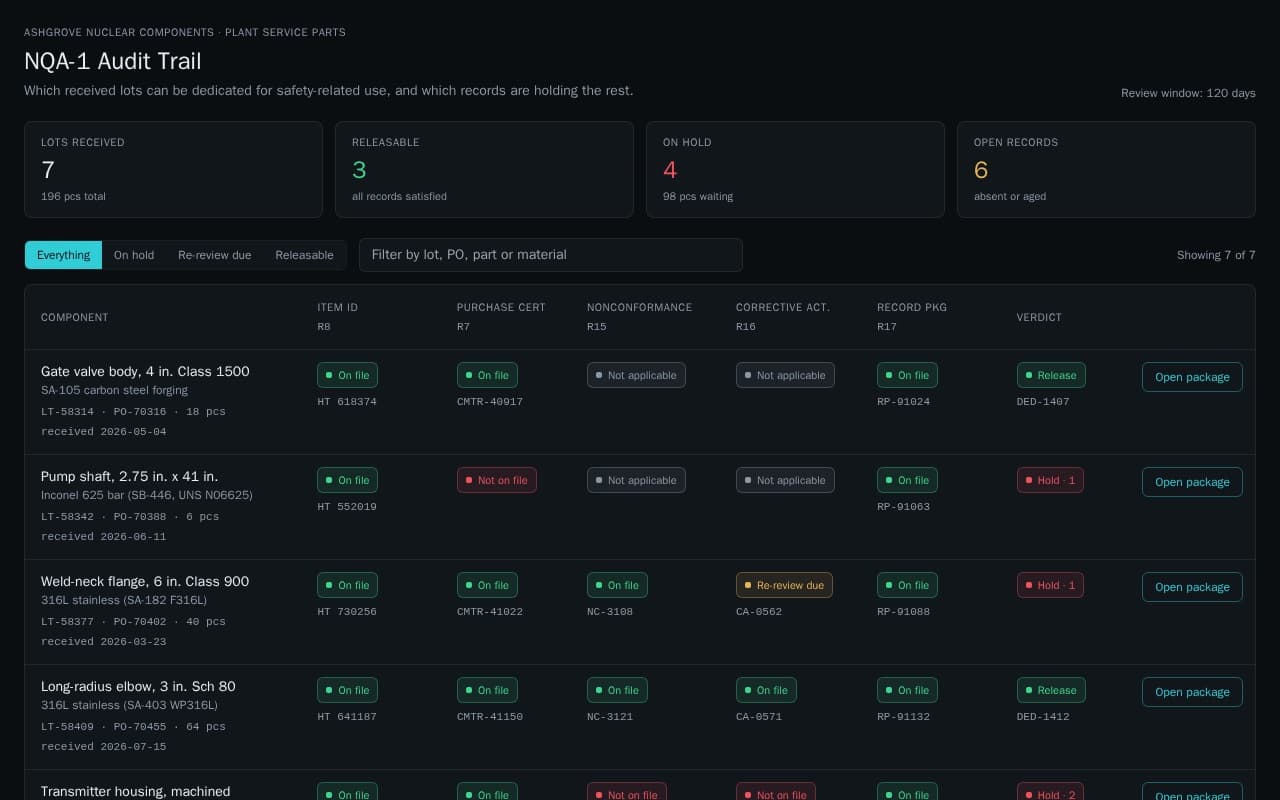
NQA-1 Audit Trail
Is this lot ready for commercial-grade dedication, and what is still missing?
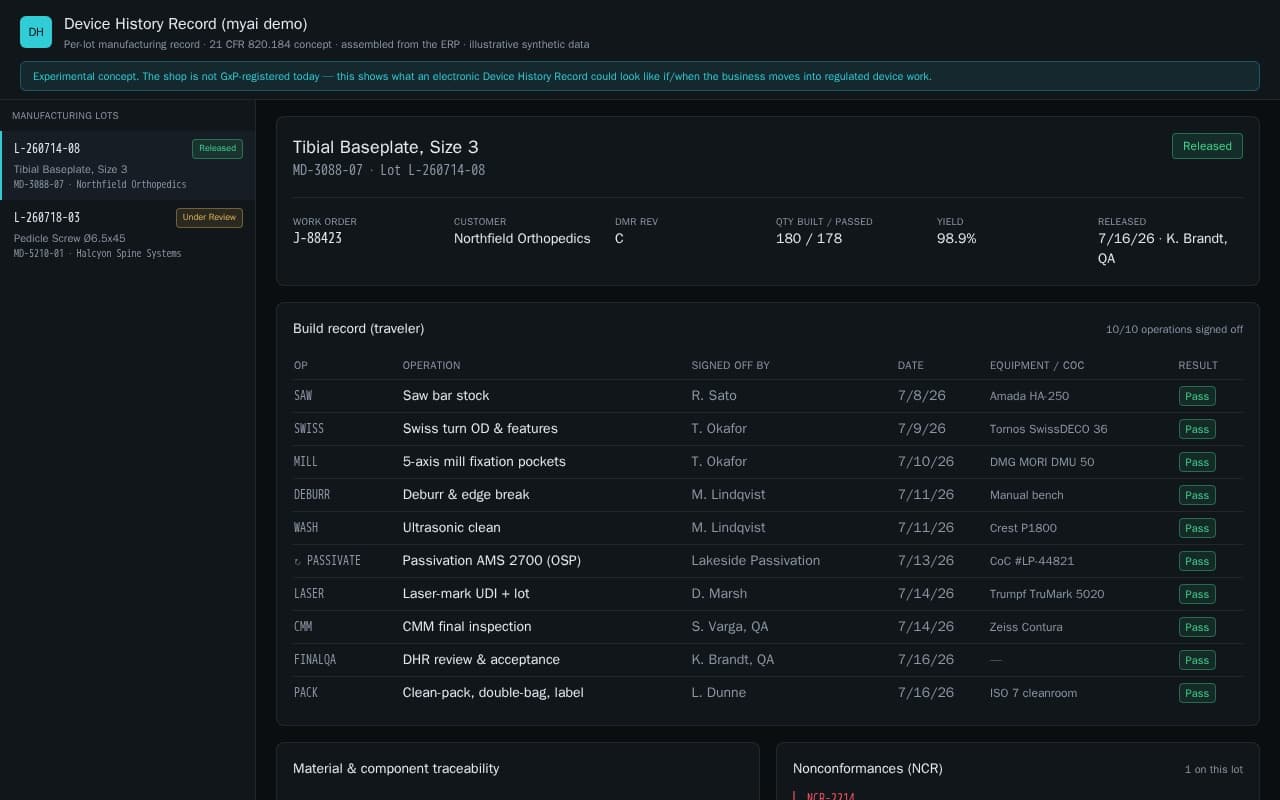
Device History Record
Was this lot built to its master record, and can we prove it?
Finance and strategy
Close, cash, cost, material and tariff exposure, budgets, and the operating review.
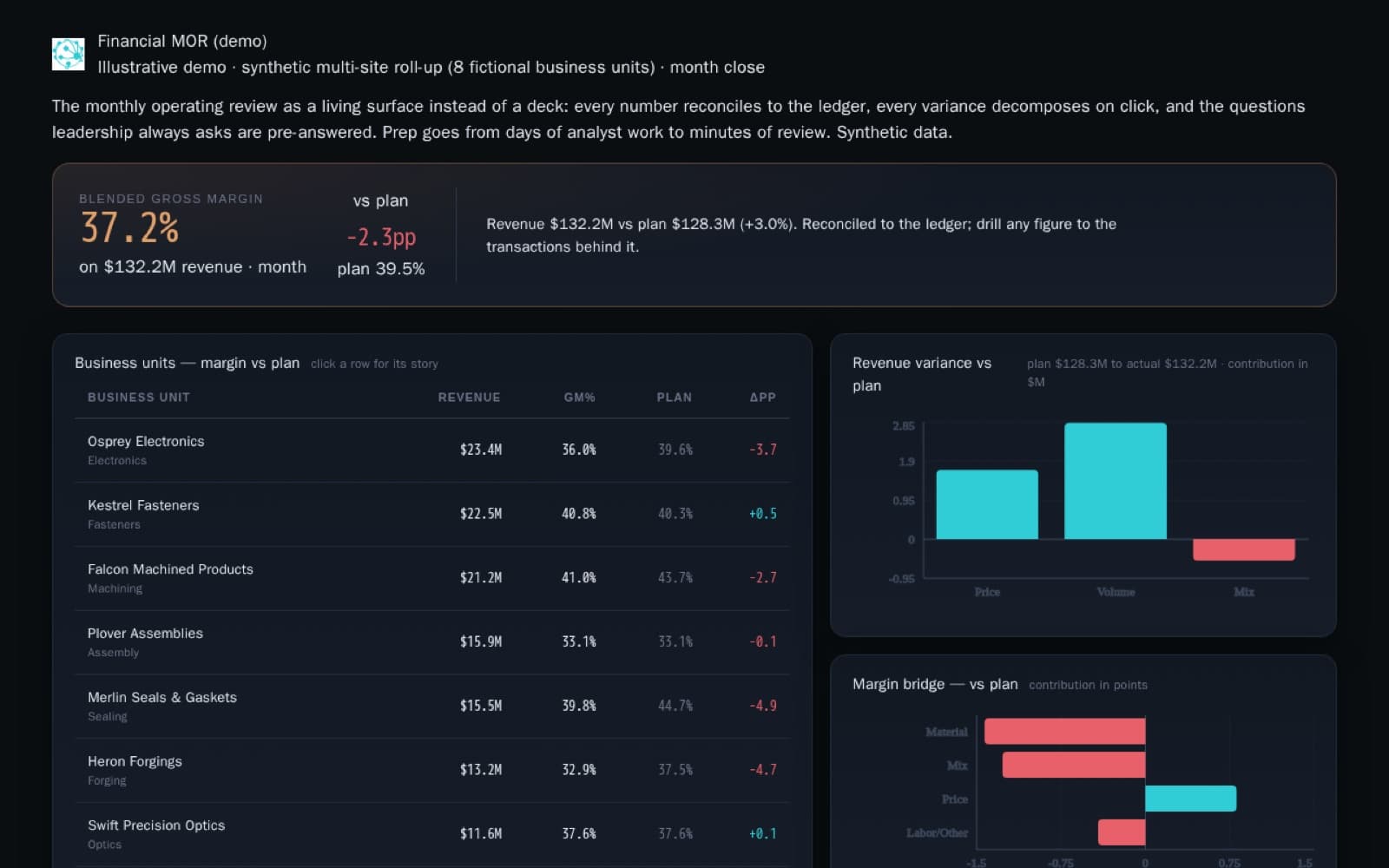
Financial Operating Review
What moved margin, and what needs a decision before the meeting?
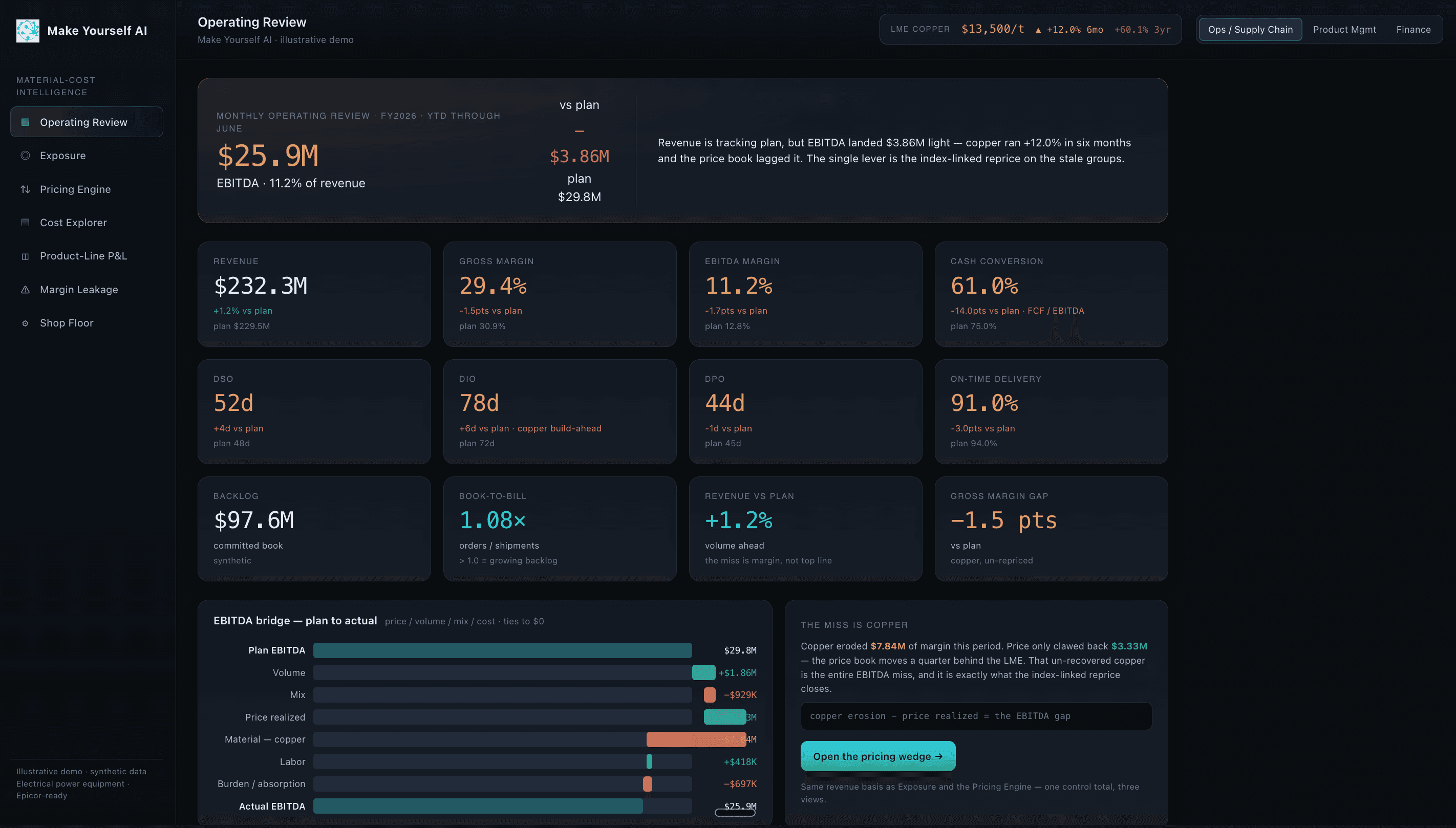
Material-Cost Intelligence
Where will commodity moves reach margin first?
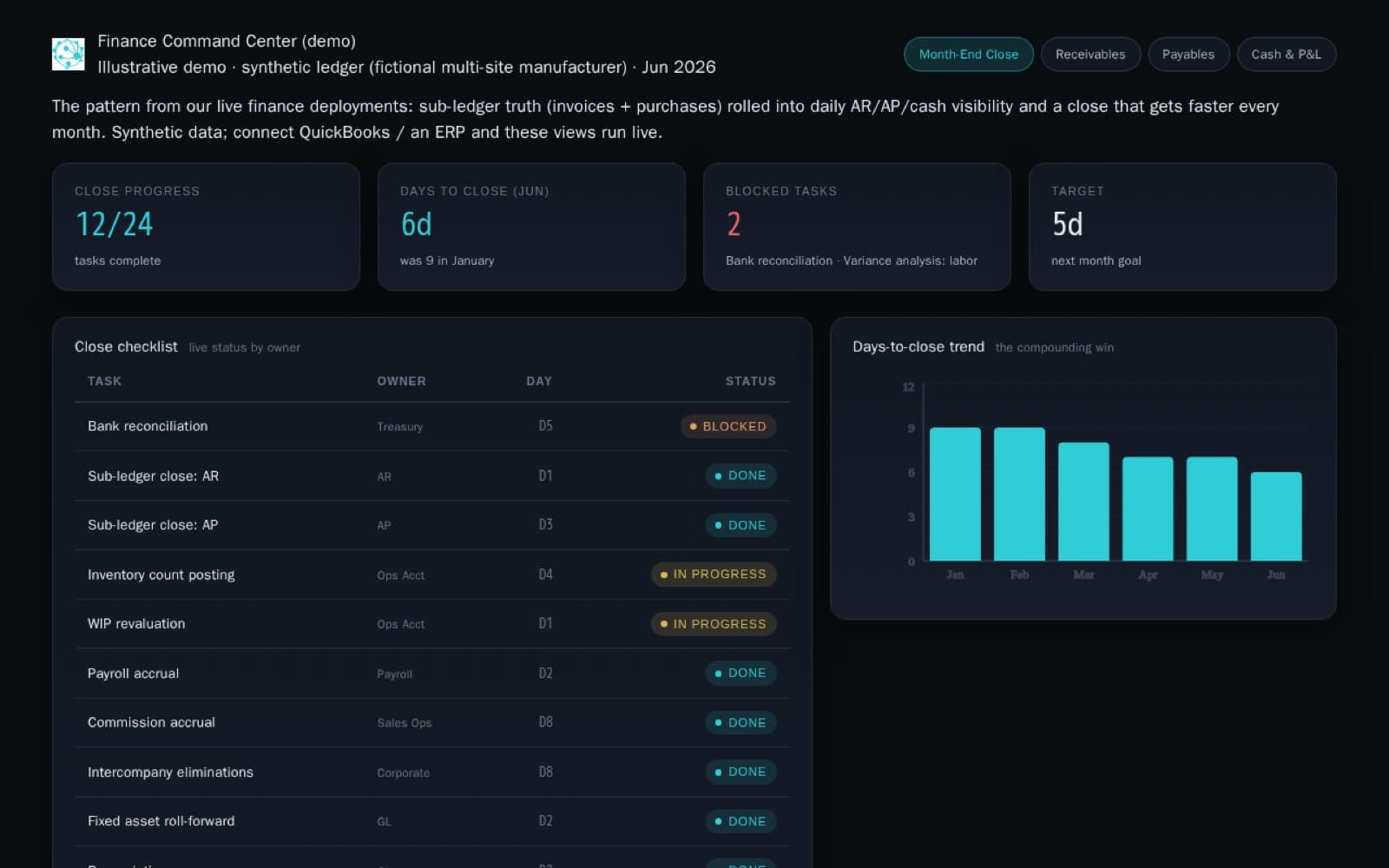
Finance Command Center
What is blocking close, cash, or collections today?
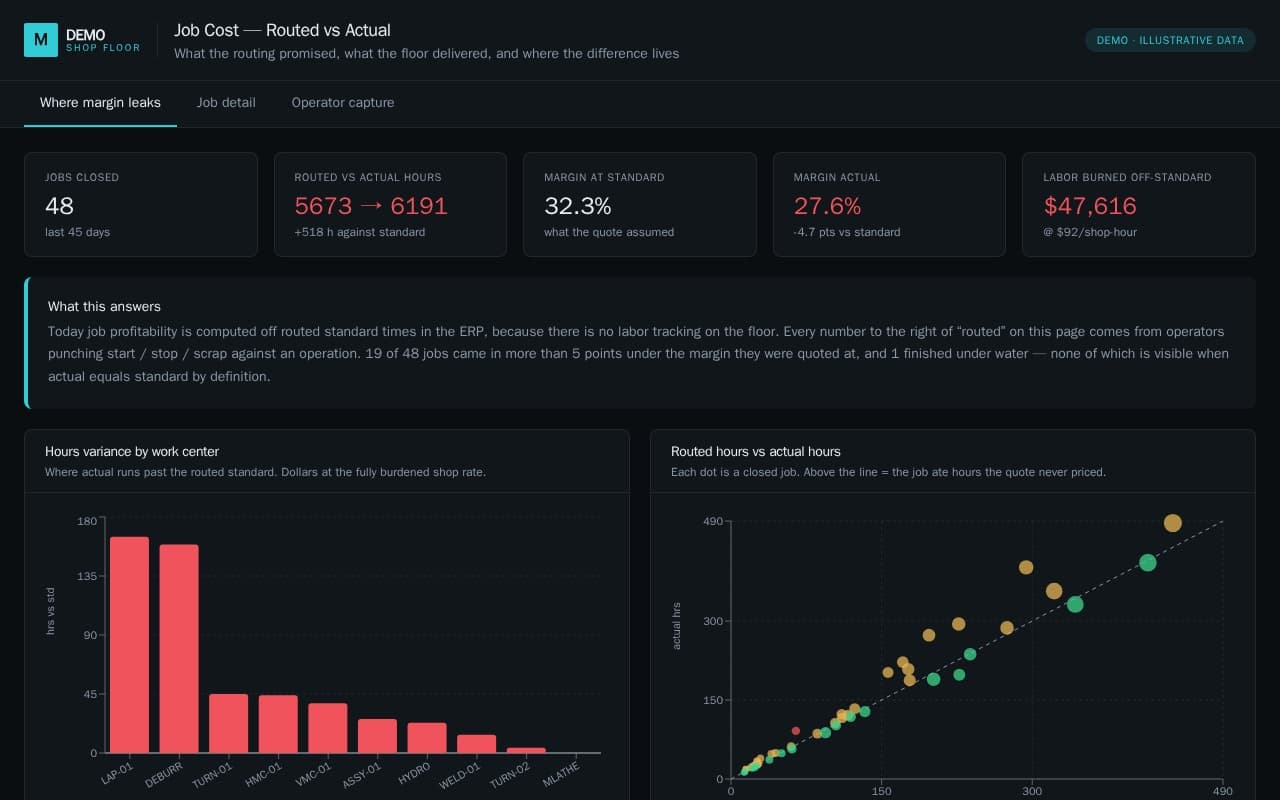
Job Cost Analysis
Where did actual job cost move away from the estimate?
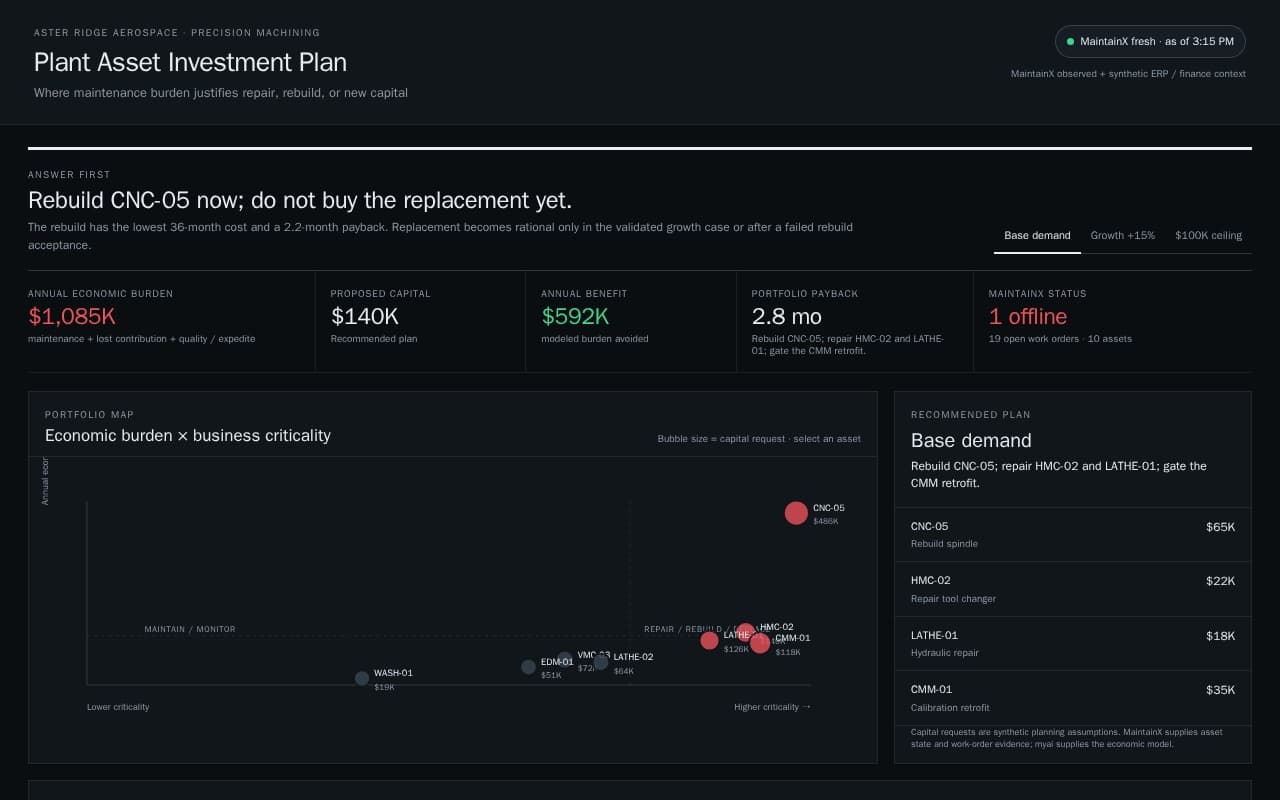
Asset Investment Planner
Repair, rebuild, or replace, and in which order?
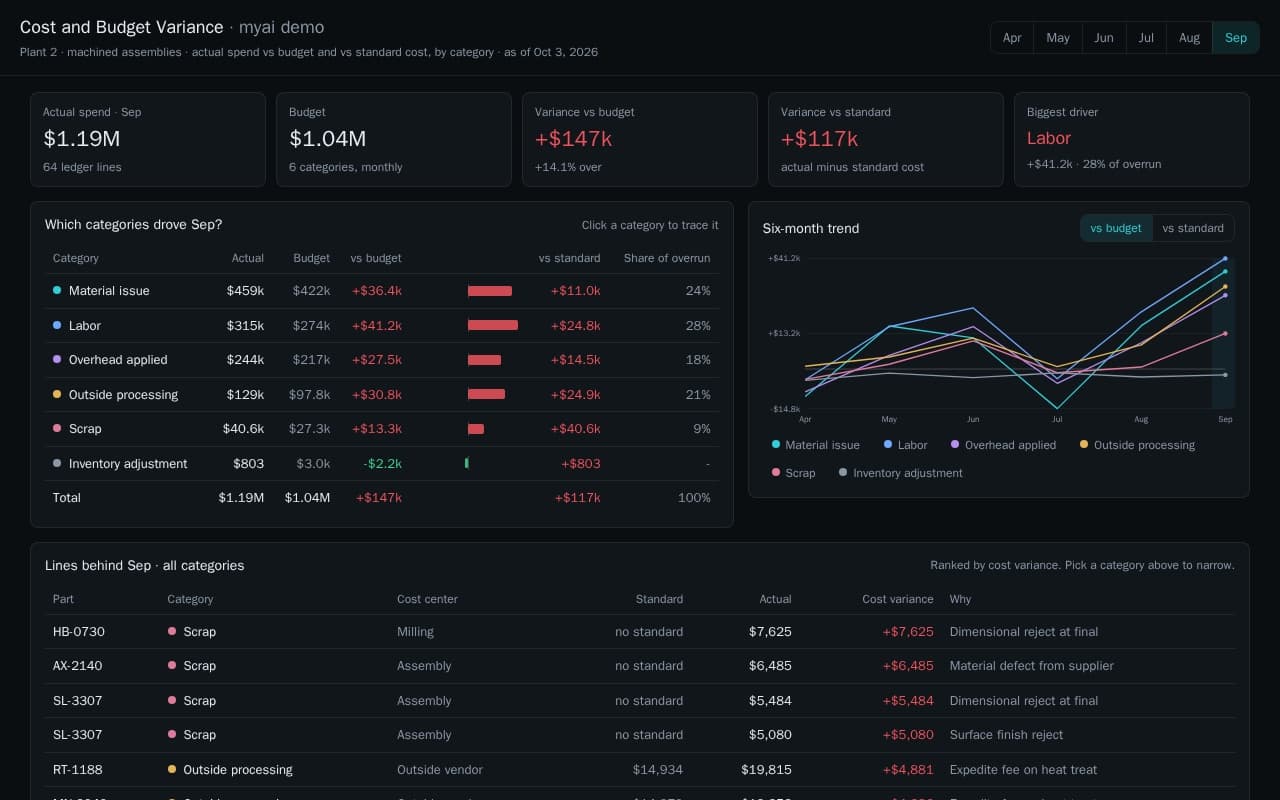
Cost and Budget Variance
Which cost categories ran over budget or standard this month, and which lines drove it?
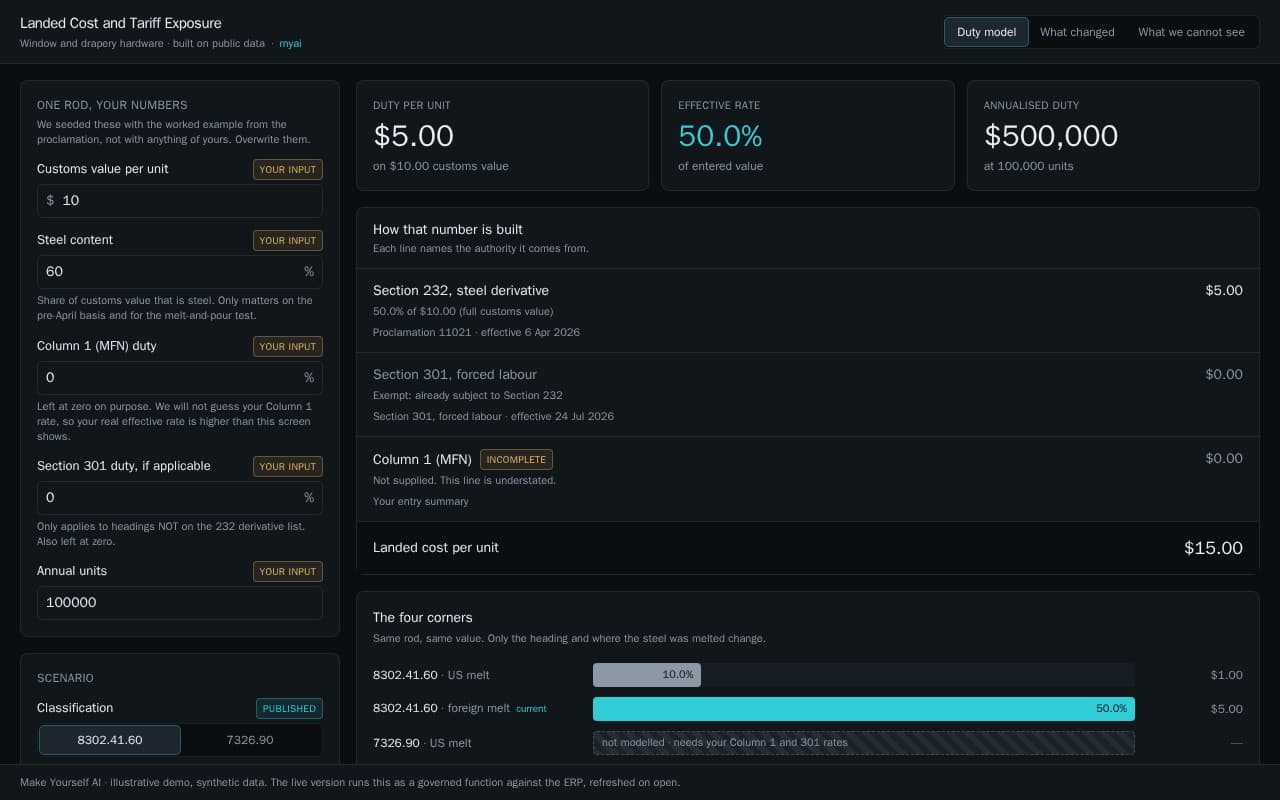
Landed Cost and Tariff Exposure
What does this imported part really cost once the duty rules change?
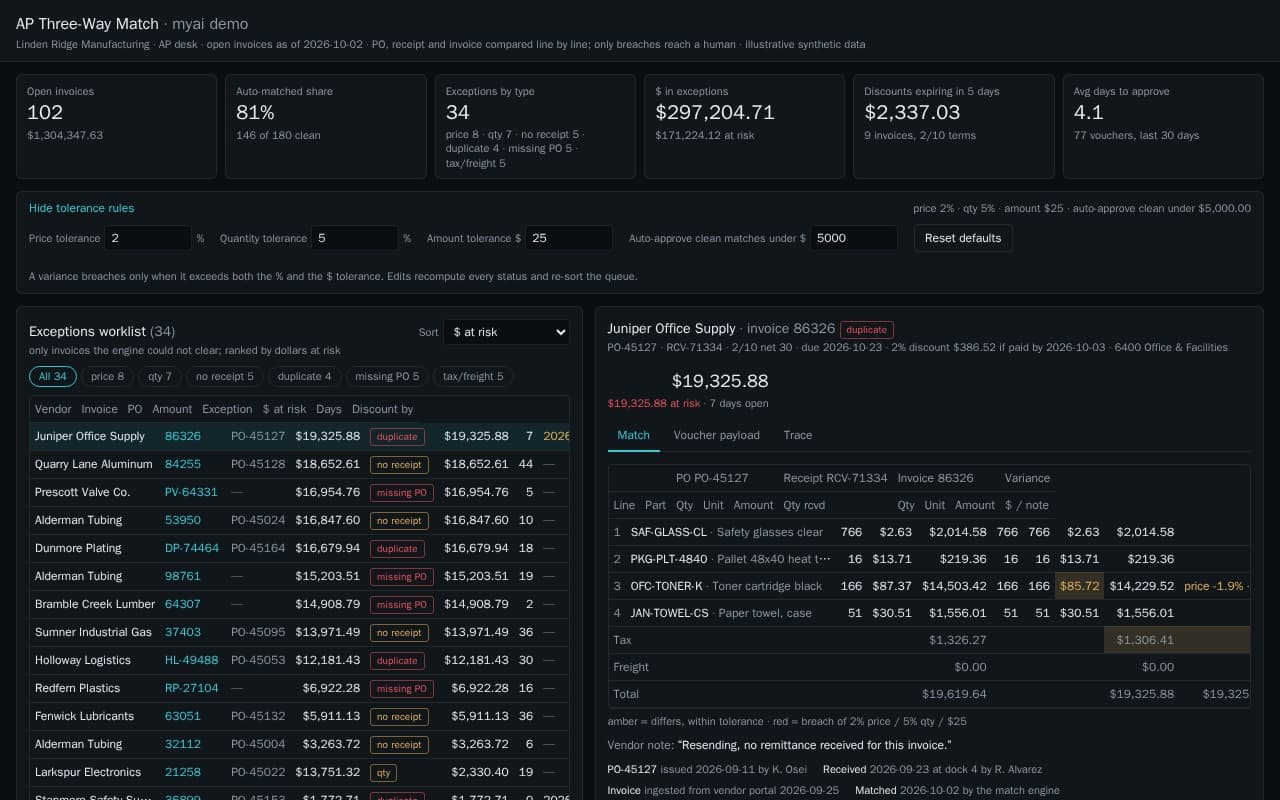
AP Three-Way Match
Which vendor invoices need a person, and which can pay themselves?
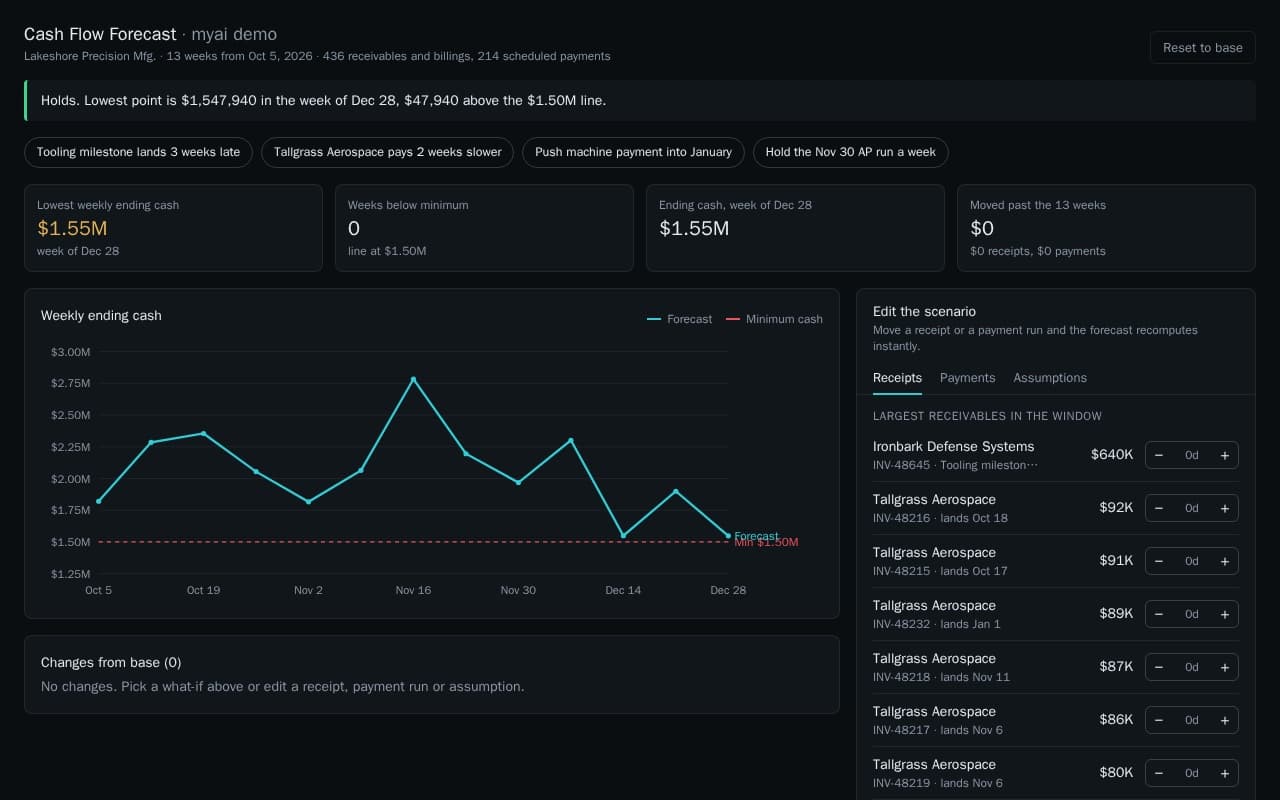
Cash Flow Forecast
Will weekly cash hold above the minimum for the next 13 weeks, and what if a payment slips?
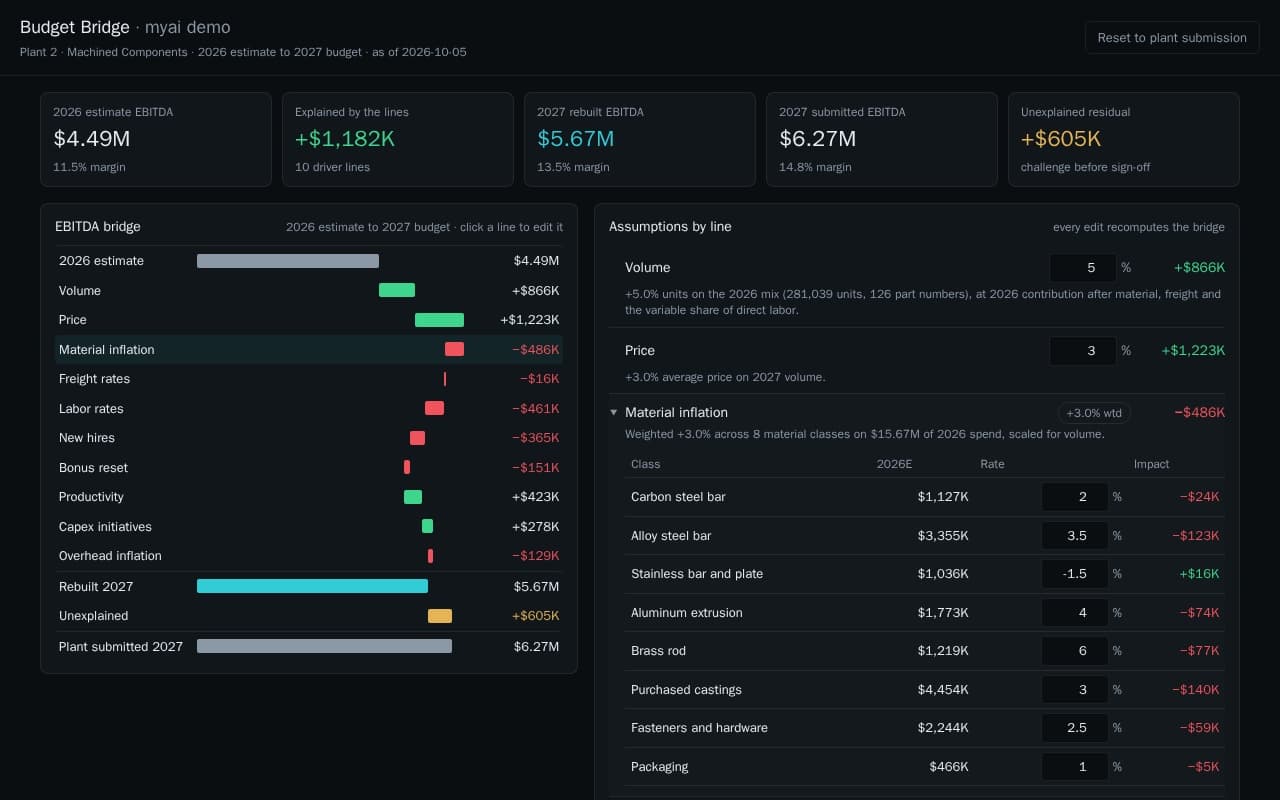
Budget Bridge
What explains next year's EBITDA budget, line by line, and what is still unexplained?
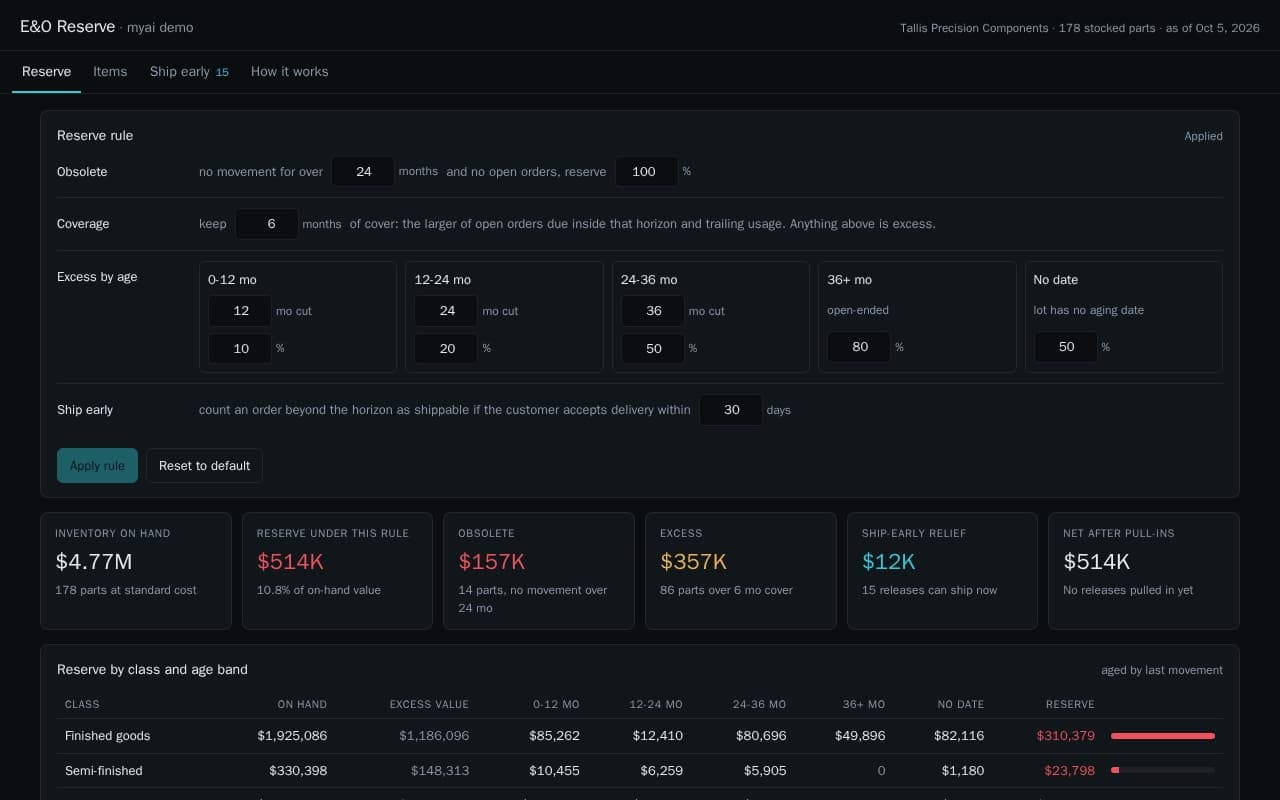
Excess & Obsolete Reserve
What does the inventory reserve look like under our rule, and what can still ship or be dispositioned?
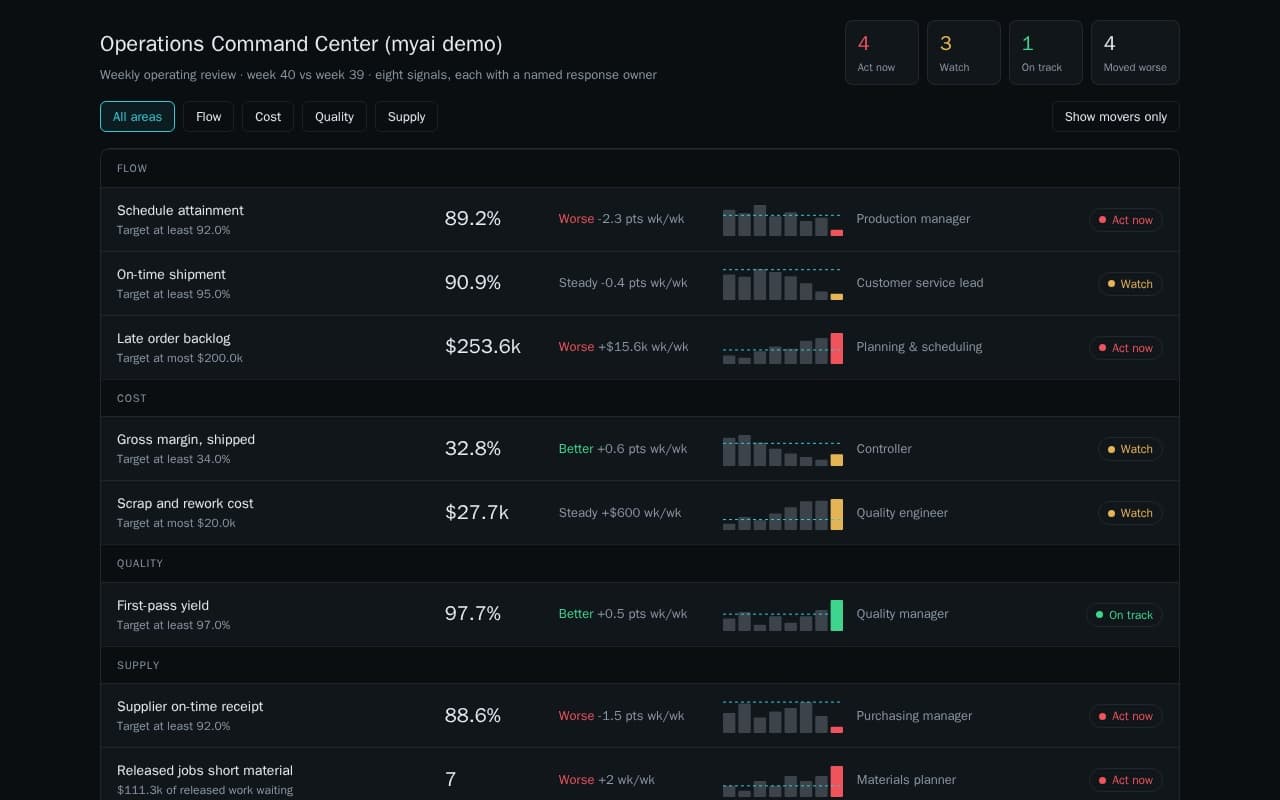
Operations Command Center
Which operating signals moved this week, and who owns the response?
In practice
One engagement, several operational rhythms. A PE-backed aerospace and defense supplier put them to work across estimating, finance, and operations, on the ERP, spreadsheets, and email already in place. No migration.
Read the case study →